
This post may contain affiliate links. Please read our policy page.
When designing industrial hallways, I focus on safety and efficiency. I recommend slip-resistant flooring to prevent falls, energy-efficient LED fixtures for ideal lighting, and durable ceiling tiles to enhance acoustics. Eco-friendly signage and recycled rubber matting contribute to a sustainable environment. Incorporating solar-powered lighting solutions boosts energy efficiency. To manage stormwater effectively, permeable paving solutions are essential. Each of these elements plays a vital role in creating a safe and functional workspace, and there’s much more to take into account.
Slip-Resistant Flooring

When considering the safety of industrial hallways, I find that slip-resistant flooring is vital. The risk of slips and falls in these environments can lead to significant injuries and costly downtime.
I’ve analyzed various materials, and those with textured surfaces or specialized coatings effectively reduce slipping hazards. Rubber and vinyl options, for instance, demonstrate excellent grip even in wet conditions.
It’s important to select flooring that’s not only slip-resistant but also durable enough to withstand heavy foot traffic and machinery. I recommend testing the coefficient of friction for any chosen material to guarantee compliance with safety standards.
Implementing slip-resistant flooring isn’t just a precaution; it’s a proactive approach to maintaining a safe and efficient workspace.
Recommended Items
Discover our top picks for materials and tools to brighten up your industrial hallways with solar-powered lights!
Products
High-Reflectance Wall Paint

While ensuring safety with slip-resistant flooring is a priority, the choice of wall finishes also plays a significant role in creating an effective industrial environment.
High-reflectance wall paint stands out as a strategic selection for industrial hallways. This type of paint enhances ambient light levels, minimizing the reliance on artificial lighting, which is vital when integrating solar-powered systems. The reflective properties of the paint can improve visibility, thereby promoting safety and productivity.
Additionally, using high-reflectance paint can help in reducing energy costs, as it maximizes the effectiveness of any available light. When selecting a high-reflectance option, I recommend evaluating its durability and ease of maintenance, ensuring it withstands the rigors of an industrial setting while maintaining its reflective qualities over time.
Task Overview for Hallway Decor
Energy-Efficient LED Fixtures

As I explore the benefits of energy-efficient LED fixtures for industrial hallways, it’s clear that these lighting solutions offer considerable advantages over traditional options.
First, LEDs consume notably less energy, resulting in lower operational costs. They also have a longer lifespan, often lasting up to 25,000 hours or more, which reduces replacement frequency and maintenance efforts.
In addition, LEDs emit less heat, contributing to a cooler working environment and decreased air conditioning costs. Their directional lighting capabilities enhance visibility and minimize wasted light, improving safety in industrial settings.
By integrating smart controls, such as occupancy sensors, I can additionally optimize energy use.
Durable Ceiling Tiles

Energy-efficient LED fixtures greatly enhance the overall functionality of industrial hallways, but the ceiling environment also plays an important role in maintaining a safe and efficient workspace. Durable ceiling tiles are vital in this situation.
Energy-efficient LED fixtures improve industrial hallways, while durable ceiling tiles ensure a safe and efficient workspace.
I recommend selecting materials that resist moisture, fire, and impacts, as these properties help to guarantee longevity and safety. In my experience, options like mineral fiber and metal tiles provide excellent durability while maintaining acoustic performance.
In addition, these tiles can promote energy efficiency by optimizing light distribution, reducing glare, and minimizing energy waste. When choosing ceiling tiles, consider their ease of installation and maintenance, as well.
A well-designed ceiling system ultimately contributes to a more productive industrial environment, facilitating both safety and efficiency.
Recycled Rubber Matting

Recycled rubber matting serves as an exceptional flooring solution for industrial hallways, combining resilience and sustainability. I’ve found that this material withstands heavy foot traffic and equipment use, which is essential in high-demand environments.
Its slip-resistant surface enhances safety, minimizing the risk of accidents. Additionally, the cushioning effect of rubber reduces fatigue for workers who are on their feet for long periods.
One of the standout features is its eco-friendliness; using recycled materials considerably lowers environmental impact. The durability of rubber matting also means lower replacement costs over time.
I appreciate how easy it’s to maintain, requiring only routine cleaning to keep it looking new. Overall, recycled rubber matting effectively meets the rigorous demands of industrial settings while promoting sustainability.
Low-VOC Adhesives

When considering flooring solutions like recycled rubber matting, the choice of adhesives plays a significant role in overall performance and environmental impact. Low-VOC adhesives are essential, as they minimize harmful emissions while ensuring strong bonding. I prefer these adhesives for their durability and reduced environmental footprint.
Here’s a quick comparison of Low-VOC adhesives:
| Property | Benefits |
|---|---|
| Emissions | Minimal, safer for indoor use |
| Bond Strength | Comparable to traditional adhesives |
| Drying Time | Often quicker, enhancing efficiency |
Fiber-Reinforced Polymers

Fiber-reinforced polymers (FRPs) have revolutionized the construction of industrial hallways by combining strength, durability, and lightweight properties.
In my experience, using FRPs greatly enhances structural integrity while minimizing the overall weight of installations. These composites consist of polymer matrices reinforced with fibers, typically glass or carbon, which provide exceptional tensile strength.
I’ve found that FRPs resist corrosion and environmental degradation, making them ideal for demanding industrial settings. Their ease of fabrication allows for customized designs, ensuring the best fit and function in any space.
Additionally, FRPs can be molded into complex shapes, enhancing aesthetic appeal without sacrificing performance.
Ultimately, integrating FRPs into industrial hallways leads to safer, more efficient environments that stand the test of time.
Solar-Powered Exit Signs

As industries increasingly prioritize sustainability, solar-powered exit signs emerge as an effective solution for enhancing safety while reducing energy consumption. These signs utilize photovoltaic cells to convert sunlight into electricity, ensuring they remain operational even during power outages. Their energy independence not only minimizes reliance on the grid but also reduces long-term operational costs.
I’ve found that solar-powered exit signs can be strategically placed in both indoor and outdoor settings, providing clear visibility in emergency situations. Additionally, many models are designed to withstand harsh industrial environments, ensuring durability and longevity.
Implementing these signs not only complies with safety regulations but also reflects a commitment to environmental responsibility. Shifting to solar-powered exit signs is a smart investment for any forward-thinking business.
Acoustic Panels
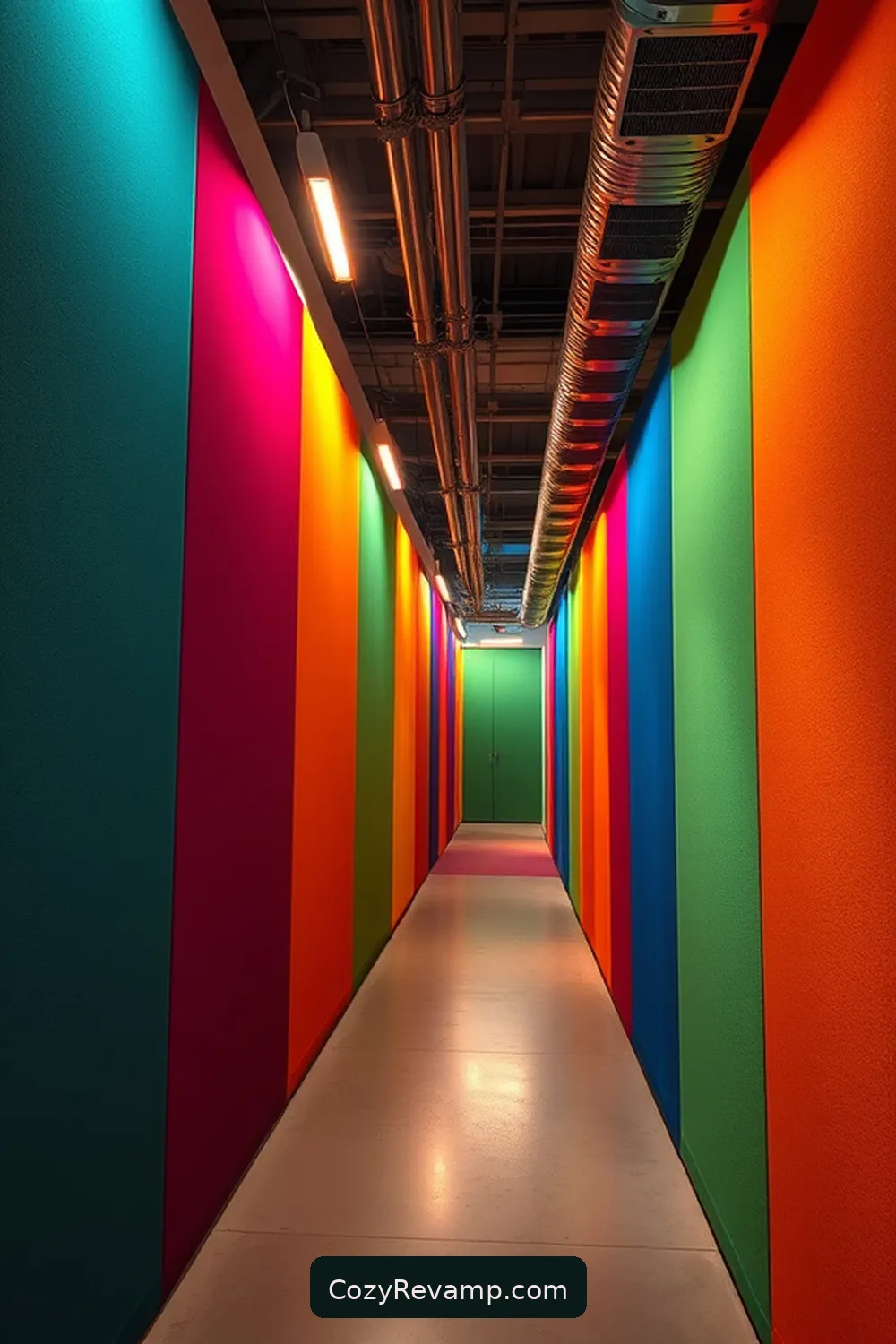
Acoustic panels are essential components in managing sound quality within industrial hallways. I’ve found that these panels effectively reduce noise levels, enhancing communication and productivity among workers.
By absorbing sound waves, they minimize echo and reverberation, which are common in large, open spaces. When selecting acoustic panels, I consider their material composition, thickness, and installation method, as these factors greatly influence performance.
Typically, I recommend panels made from high-density fiberglass or foam for ideal sound absorption. Additionally, I pay close attention to placement; strategic positioning along walls or ceilings can maximize their effectiveness.
Implementing acoustic panels not only creates a more pleasant working environment but also improves safety by ensuring that important verbal instructions are clearly heard.
Non-Toxic Wall Coatings

Managing sound in industrial hallways is just one aspect of creating a safe and efficient workspace. Equally important is the choice of wall coatings.
I’ve found that non-toxic wall coatings offer a sustainable solution while enhancing the environment. These coatings reduce volatile organic compounds (VOCs), minimizing health risks for employees and improving air quality.
Non-toxic wall coatings enhance the environment by reducing VOCs, improving air quality, and minimizing health risks for employees.
When selecting a non-toxic option, I consider durability, ease of cleaning, and resistance to chemicals common in industrial settings. Many of these coatings also provide excellent adhesion, ensuring longevity against wear and tear.
Additionally, they can be applied in various colors, contributing to a visually appealing atmosphere. Ultimately, investing in non-toxic wall coatings promotes safety and supports a healthier work environment.
Impact-Resistant Doors

While ensuring a secure environment in industrial hallways, I prioritize the installation of impact-resistant doors. These doors are engineered to withstand significant force, reducing the risk of damage from heavy equipment or accidental collisions. Their robust design not only enhances safety but also minimizes maintenance costs over time.
| Door Type | Material | Impact Rating |
|---|---|---|
| Steel Reinforced | Steel | High |
| Fiberglass | Composite | Medium |
| Aluminum | Aluminum Alloy | Low |
| Wood | Laminated Wood | Medium |
| Polycarbonate | Polycarbonate | High |
Choosing the right impact-resistant door is essential for maintaining operational efficiency and safety in industrial settings. I recommend evaluating both material properties and impact ratings to make informed decisions.
Sustainable Insulation Materials

As I assess the insulation needs of industrial hallways, I find that opting for sustainable materials not only benefits the environment but also enhances energy efficiency.
Materials like cellulose—derived from recycled paper—offer excellent thermal performance and greatly reduce energy costs. Another option, sheep’s wool, provides natural insulation while being biodegradable, presenting a dual advantage.
Moreover, I often recommend rigid foam boards made from extruded polystyrene, which contain recycled content and are highly efficient in minimizing heat transfer.
Additionally, using cotton insulation, sourced from post-industrial textiles, proves effective in regulating temperature without harmful chemicals.
Biodegradable Wall Cladding

Incorporating biodegradable wall cladding into industrial hallways aligns perfectly with the goal of promoting sustainability. These materials, often derived from natural resources like bamboo, cork, or recycled composites, offer a reduced environmental impact compared to traditional options. They not only provide structural integrity but also enhance aesthetic appeal while being fully compostable at the end of their life cycle.
I’ve found that their installation requires specific preparation techniques to guarantee longevity and performance, including moisture management and appropriate fastening methods.
Additionally, they can considerably contribute to a facility’s LEED certification, making them an attractive choice for eco-conscious businesses. By selecting biodegradable wall cladding, we’re making a tangible commitment to reducing our carbon footprint while maintaining functional design in industrial settings.
Modular Grid Systems

Modular grid systems offer a versatile solution for organizing and optimizing industrial hallways. I find these systems particularly effective due to their adaptability, enabling quick reconfiguration as operational needs change.
Each module can be customized, allowing for integration with various components like shelving or lighting fixtures. This flexibility not only maximizes space but also enhances workflow efficiency.
Moreover, the grid structure supports load distribution, ensuring safety within high-traffic areas. I’ve noticed that the materials used in these systems often include lightweight yet durable composites, which resist wear and tear.
Photovoltaic Glass
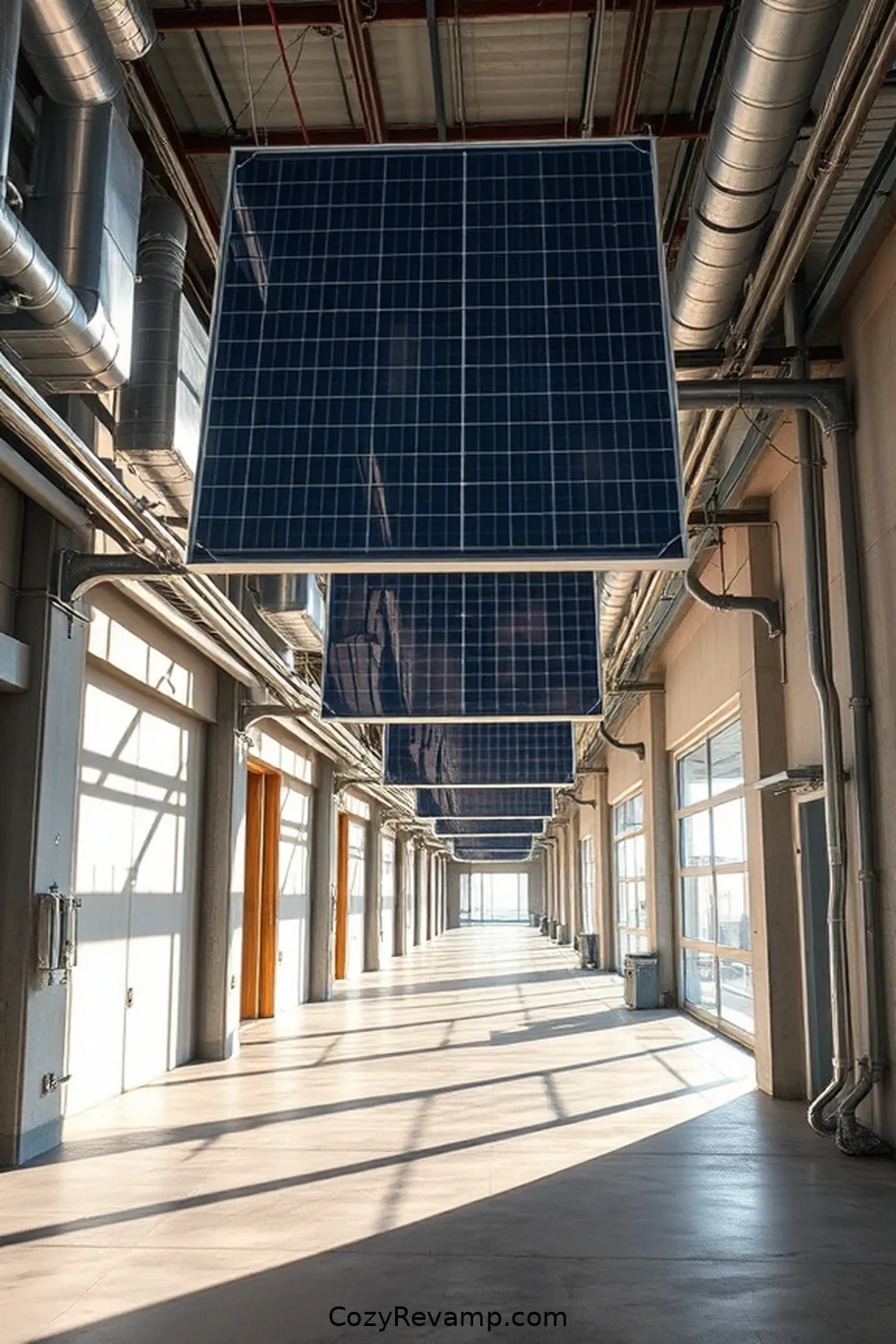
While exploring innovative solutions for industrial hallways, I’ve found that photovoltaic glass stands out as a remarkable option for enhancing energy efficiency. This cutting-edge material not only provides natural light but also generates power, making it a dual-purpose solution.
Here are a few key benefits I’ve discovered:
- Energy Generation: It converts sunlight into electricity, reducing reliance on conventional power sources.
- Aesthetic Appeal: Its sleek design seamlessly integrates into modern architectural styles.
- Sustainability: Using renewable energy diminishes the carbon footprint of industrial operations.
- Cost Savings: By lowering energy bills, it creates long-term financial benefits.
Incorporating photovoltaic glass in industrial hallways could revolutionize how we approach energy consumption, making facilities more sustainable and efficient.
Water-Resistant Electrical Fixtures

As I explore the requirements for industrial hallways, the importance of water-resistant electrical fixtures becomes increasingly apparent.
These fixtures are critical for guaranteeing safety and functionality in environments exposed to moisture, spills, or dust. They’re designed to prevent short circuits and electrical failures that can arise from water intrusion.
I often recommend fixtures with at least an IP65 rating, indicating they’re both dust-tight and protected against water jets. Additionally, materials like stainless steel and polycarbonate not only enhance durability but also resist corrosion.
Implementing these fixtures effectively reduces maintenance costs and downtime, ultimately contributing to a safer workspace.
It’s vital to prioritize these specifications during the planning phase to guarantee long-lasting performance and reliability in industrial settings.
Eco-Friendly Signage

In my experience, integrating eco-friendly signage into industrial hallways not only enhances visual communication but also aligns with sustainable practices that are increasingly necessary in today’s environment.
Integrating eco-friendly signage in industrial spaces enhances communication and supports essential sustainable practices.
Utilizing eco-friendly materials contributes to a healthier workspace while promoting corporate responsibility. Here are some key aspects to evaluate:
- Biodegradable Materials: Use materials that decompose naturally, reducing landfill waste.
- Sustainable Inks: Opt for soy or vegetable-based inks that minimize toxic emissions.
- Recyclable Signage: Select signs that can be easily recycled at the end of their life cycle.
- Energy-Efficient Production: Choose manufacturers that prioritize renewable energy sources in their processes.
Green Roof Systems

Green roof systems, which I find increasingly vital for industrial applications, offer a range of benefits that extend beyond aesthetics. They effectively manage stormwater, reducing runoff and minimizing the risk of flooding.
By providing insulation, these systems can lower energy costs, leading to significant savings over time. Additionally, the vegetation helps filter pollutants, improving air quality around industrial sites.
I’ve observed that green roofs can also enhance biodiversity, creating habitats for various species, which is essential for ecological balance. Furthermore, they contribute to the overall lifespan of roofing materials by protecting them from UV radiation and temperature fluctuations.
Implementing green roof systems isn’t merely a trend; it’s a practical investment for sustainable industrial development.
Permeable Paving Solutions

While traditional paving often leads to increased runoff and potential flooding, permeable paving solutions offer a sustainable alternative for industrial hallways.
Permeable paving solutions provide a sustainable approach to managing stormwater in industrial settings, reducing flooding risks effectively.
I’ve found that these systems effectively manage stormwater, reducing environmental impact while enhancing functionality.
Here are four key benefits that resonate with me:
- Flood Mitigation: Permeable surfaces absorb rainwater, minimizing flooding risks.
- Groundwater Recharge: They promote natural aquifer replenishment, essential for water sustainability.
- Reduced Heat Island Effect: These materials maintain cooler surface temperatures, improving comfort.
- Enhanced Aesthetics: They allow for creative design, blending functionality with visual appeal.