This post may contain affiliate links. Please read our policy page.
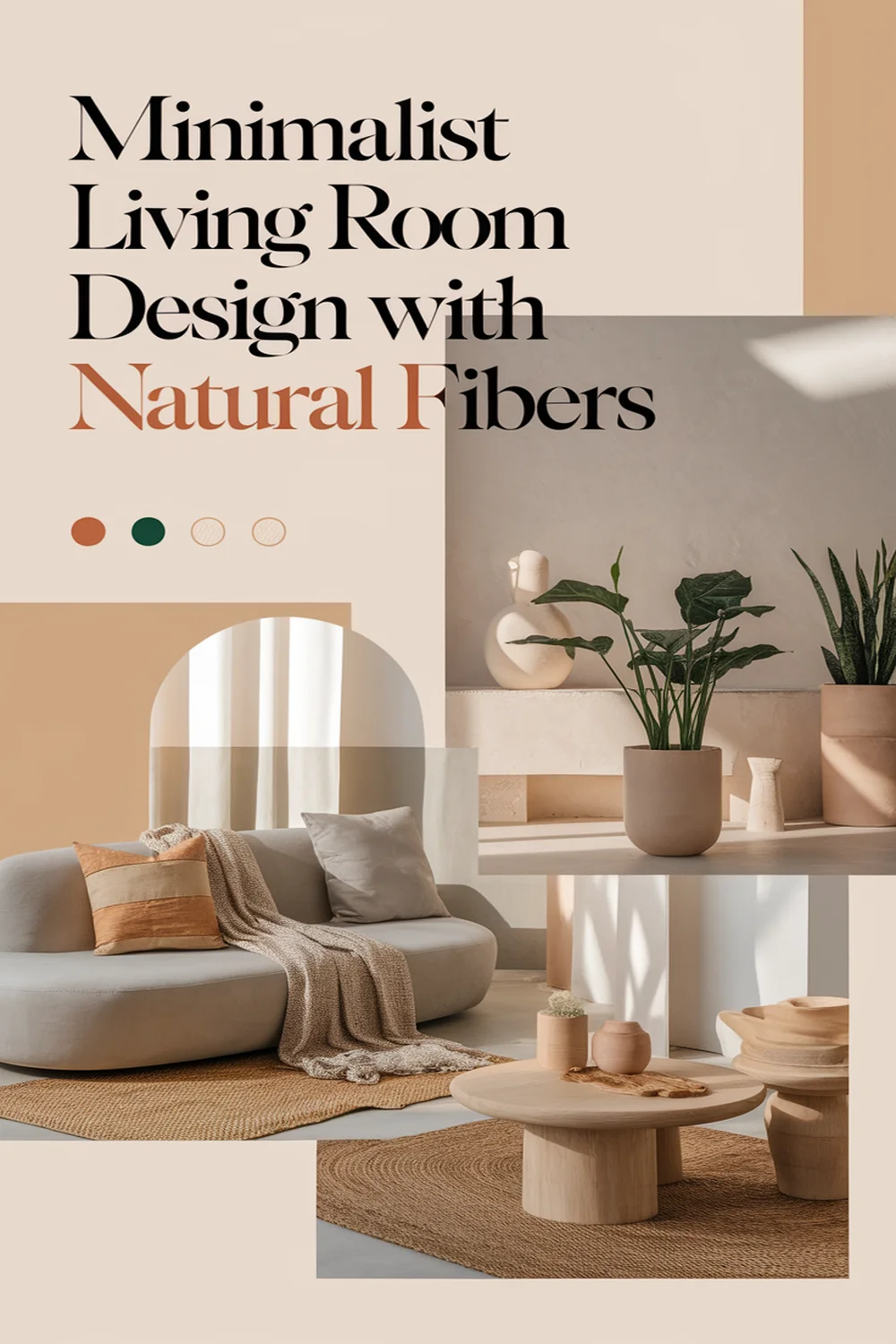
Creating a minimalist living room with upcycled fabric is a fulfilling way to infuse character while maintaining simplicity. I like to select crisp cottons or linens in neutral tones, which enhance the airy feel. Throw pillows made from old shirts or a unique wall hanging woven from fabric remnants can serve as both art and comfort. By choosing sustainable furniture pieces and being intentional with my decor, I achieve a stunning, cohesive look. There’s so much more to explore!
Understanding Minimalism in Interior Design
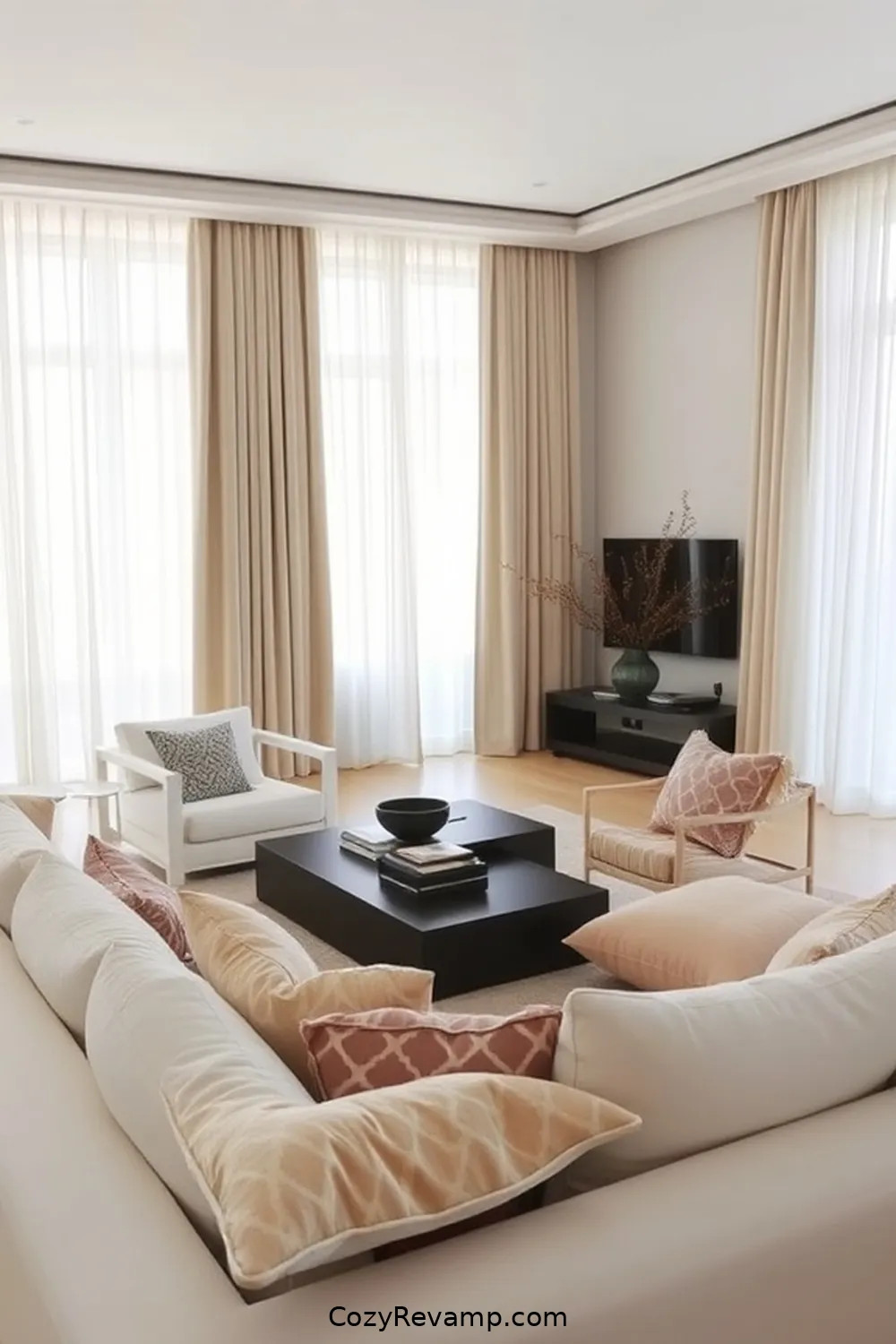
When I think about minimalism in interior design, I envision spaces that breathe, where every element serves a purpose. It’s not just about having less; it’s about creating an environment that fosters tranquility and clarity.
I focus on clean lines, muted colors, and a few carefully chosen pieces that speak to me. Each item, whether it’s a sleek couch or a simple piece of art, contributes to the overall harmony.
I’m drawn to natural materials—wood, stone, and metal—that add warmth without overwhelming the senses. The beauty of minimalism lies in its ability to highlight what truly matters, allowing me to appreciate the simplicity and functionality of each space.
It’s about making thoughtful choices, not just aesthetic ones.
The Benefits of Upcycling Fabric
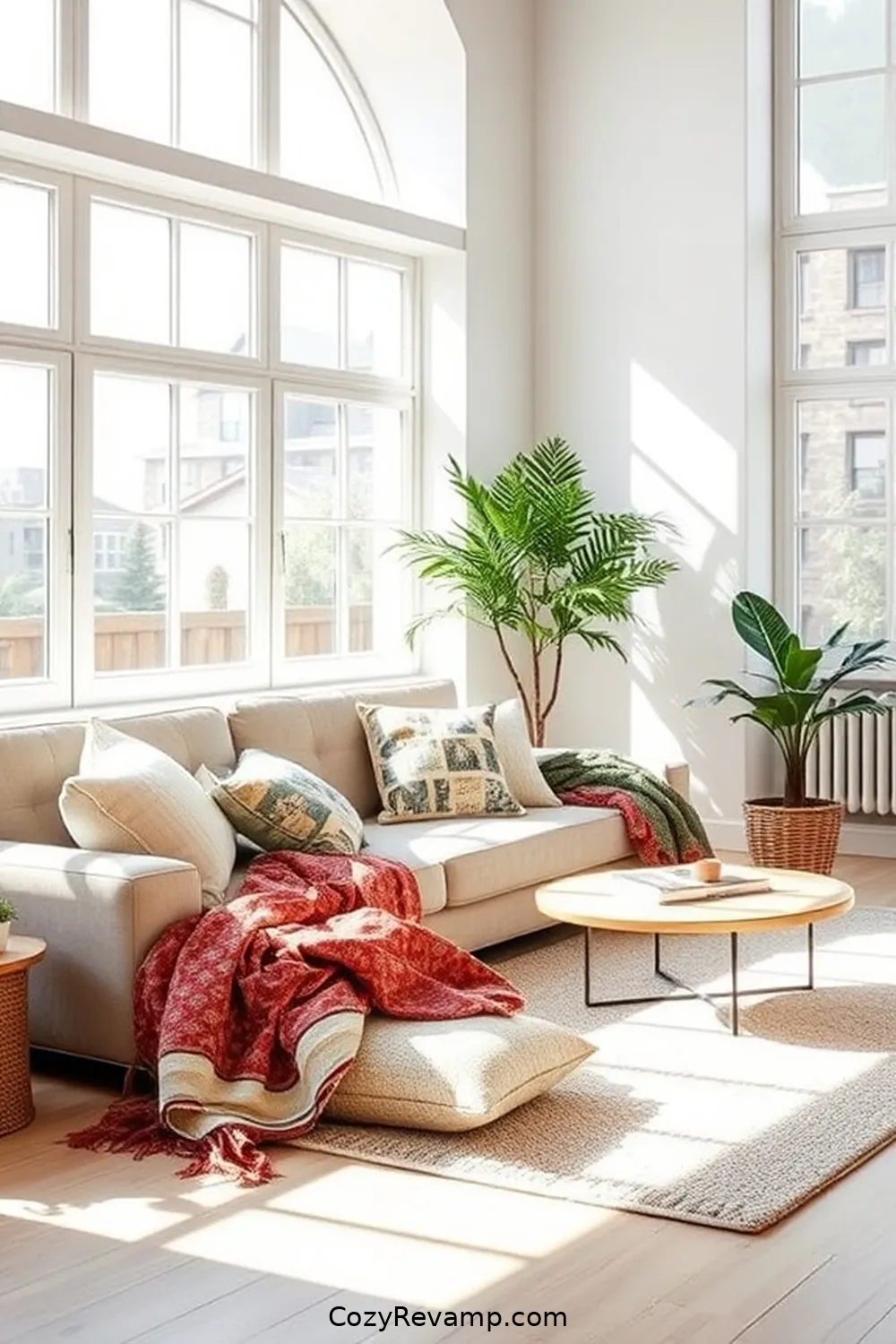
As I explore the world of interior design, I find that upcycling fabric offers a myriad of benefits that resonate deeply with my minimalist ethos.
First and foremost, it reduces waste, transforming discarded textiles into beautiful, functional pieces that breathe new life into my living space. Each upcycled item carries a unique story, adding character and charm that new materials often lack.
Plus, it encourages creativity; I get to experiment with patterns and textures, crafting personalized decor that reflects my style. Economically, it saves money—who doesn’t love that?
Finally, embracing upcycling aligns with sustainable living, allowing me to contribute to a healthier planet. It’s an empowering choice, one that elevates my home while honoring the environment.
Recommended Items
Here are our recommended products and equipment to help you create a beautiful minimalist living room—feel free to explore!
Choosing the Right Fabrics for Your Space
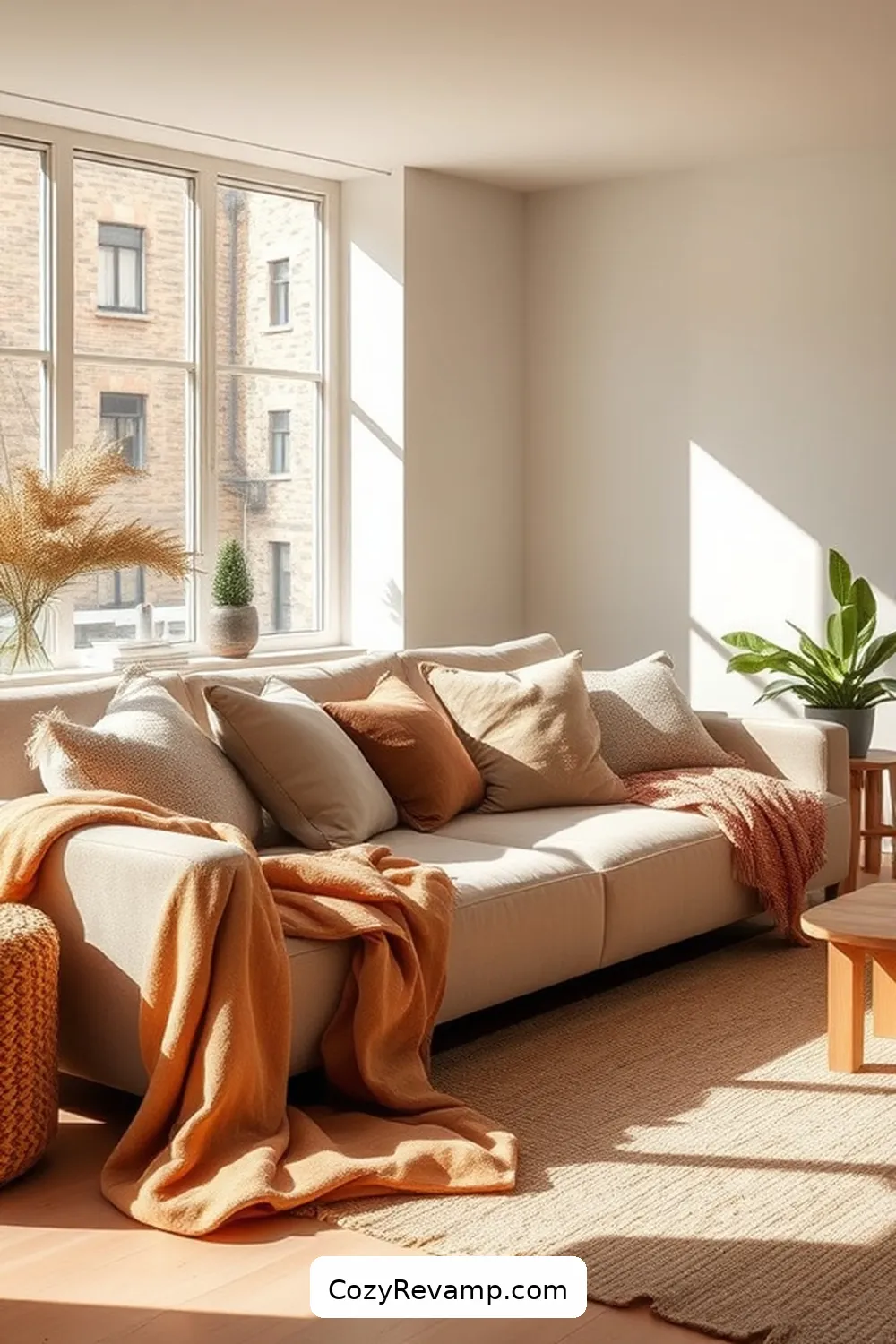
Upcycling fabric opens up a world of possibilities, but choosing the right materials for your space can make all the difference.
I’ve learned that the perfect fabric can elevate your minimalist living room while maintaining its cohesive feel. Here are my top tips for selecting the right fabrics:
- Texture: Choose fabrics like linen or cotton for a crisp, clean look that invites comfort.
- Color Palette: Stick to neutral tones or soft pastels to keep the space feeling airy and spacious.
- Durability: Opt for materials that withstand daily use, like canvas or upcycled denim.
- Pattern: If you want to add interest, select subtle patterns that won’t overwhelm the minimalist aesthetic.
With these tips, you’ll create a serene, stylish environment.
Project Plan for Minimalist Living Room Decor
DIY Upcycled Fabric Projects for Your Living Room

Transforming your living room with DIY upcycled fabric projects not only adds a personal touch but also embraces sustainability.
One of my favorite projects is creating throw pillows using old shirts or fabric remnants. Simply cut the fabric to size, sew the edges, and stuff them with leftover filling or fabric scraps.
I’ve also made a unique wall hanging by weaving together strips of various fabrics, giving my space a vibrant focal point.
For a chic coffee table runner, I’ve sewn together mismatched fabric pieces, adding a pop of color and texture.
Each project reflects my style while reducing waste, proving that creativity can breathe new life into discarded materials and elevate a minimalist aesthetic.
Creating a Cozy Atmosphere With Textiles
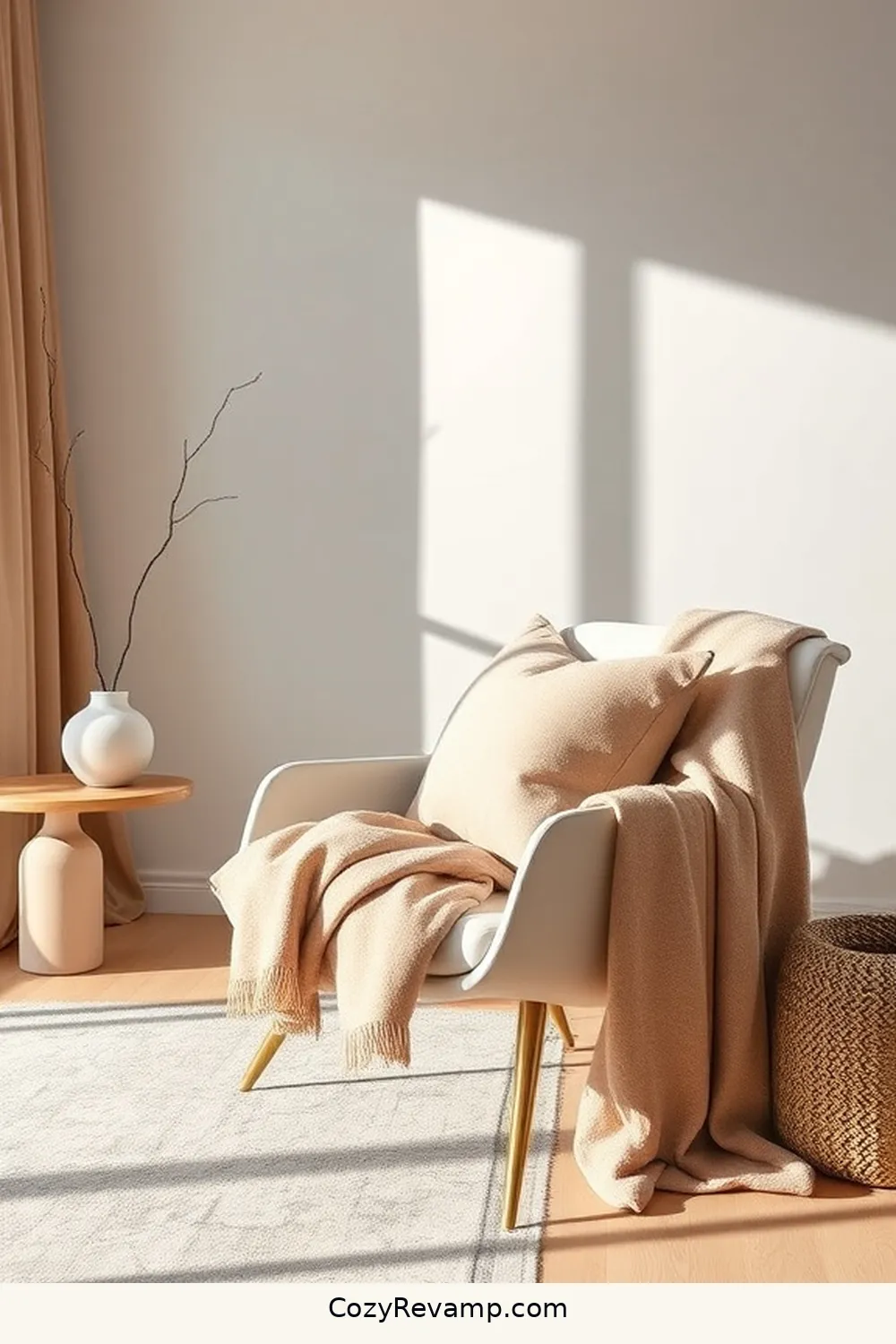
Textiles can instantly warm up a minimalist living room, making it feel inviting and comfortable.
I love how the right fabrics can transform a space. Here are four ways to create that cozy atmosphere:
- Layered Throws: Drape soft, upcycled blankets over your sofa for warmth and texture.
- Cushions: Mix various sizes and shapes of pillows to add a plush, inviting touch.
- Rugs: Use a tactile, well-placed rug to define the space and provide comfort underfoot.
- Curtains: Opt for light, flowing fabrics that filter natural light while adding softness to your windows.
Incorporating Color and Texture
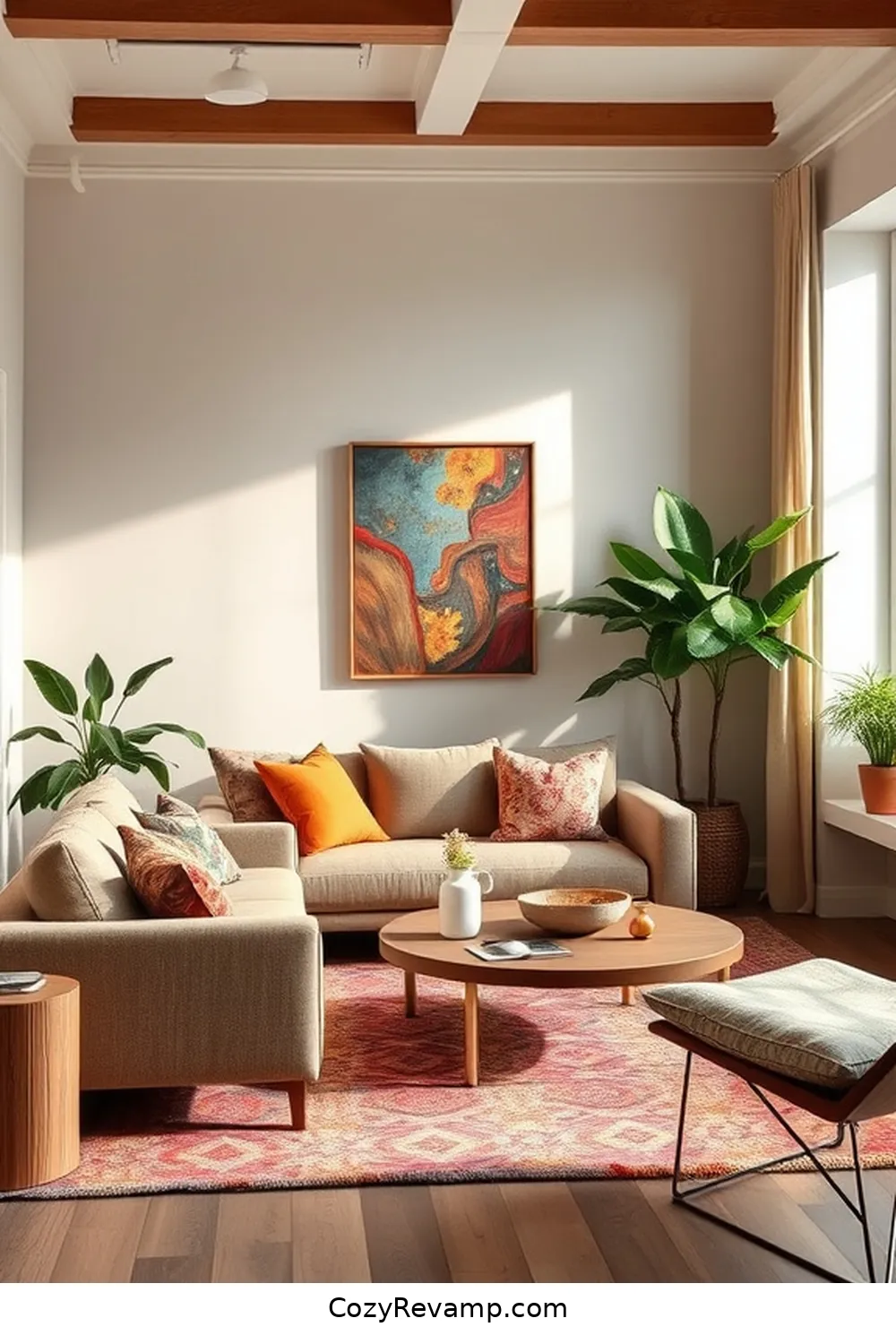
While a minimalist living room often leans towards a neutral palette, incorporating color and texture can breathe life into the space, making it feel more dynamic and engaging.
I love adding small bursts of color through upcycled fabric cushions or throws in vibrant hues, instantly transforming a bland sofa into a focal point.
Layering different textures, like a soft wool blanket over a sleek linen cushion, creates visual interest and invites touch.
I also experiment with patterned fabric on an accent chair, which adds personality without overwhelming the room.
Sustainable Furniture Options
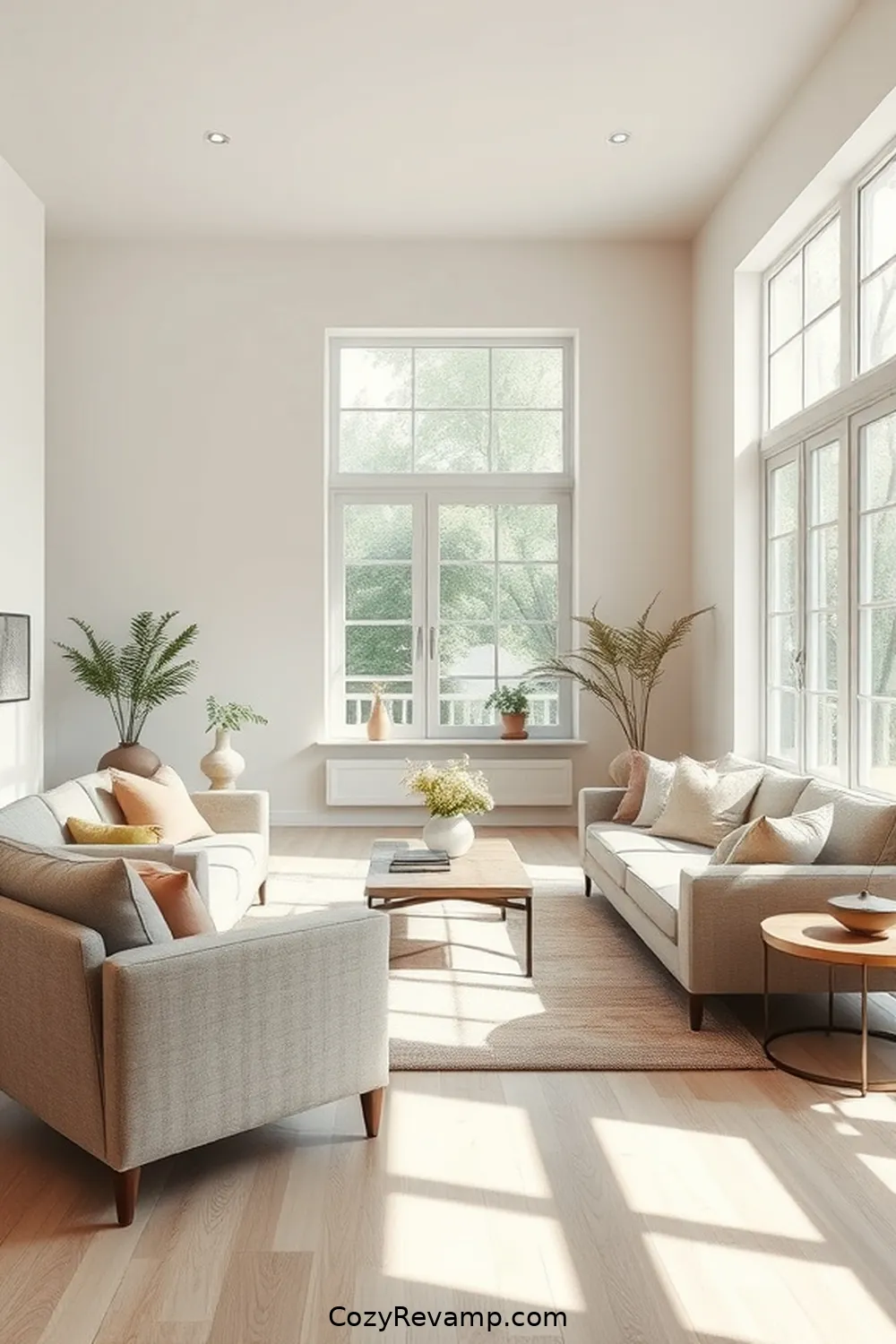
As I explore sustainable furniture options, I find that choosing pieces made from reclaimed or eco-friendly materials not only supports the environment but also enhances the minimalist aesthetic of my living room.
Here are four standout options I’ve discovered:
- Reclaimed Wood Coffee Table: Each table tells a story, showcasing unique grains and textures, while reducing deforestation.
- Bamboo Lounge Chair: Lightweight yet durable, bamboo is a renewable resource that brings warmth to my space.
- Cork Stools: These versatile seats are made from biodegradable materials, providing comfort without compromising style.
- Recycled Metal Shelving: Sleek and modern, these shelves are perfect for displaying my upcycled fabric art while being eco-conscious.
Incorporating these pieces not only feels good but looks great, too!
Accessorizing With Upcycled Fabric

Upcycling fabric has transformed my living room into a vibrant, eco-friendly haven. I’ve embraced an array of unique accessories that not only catch the eye but also tell a story.
For instance, I crafted throw pillows from vintage scarves, each pattern adding character and warmth. A patchwork table runner, made from remnants of old curtains, brings texture and a splash of color to my coffee table.
I also hung fabric banners, giving a playful touch to the walls without overwhelming the space. These small, thoughtful pieces create a cohesive look while reflecting my personality.
Maintaining a Minimalist Aesthetic
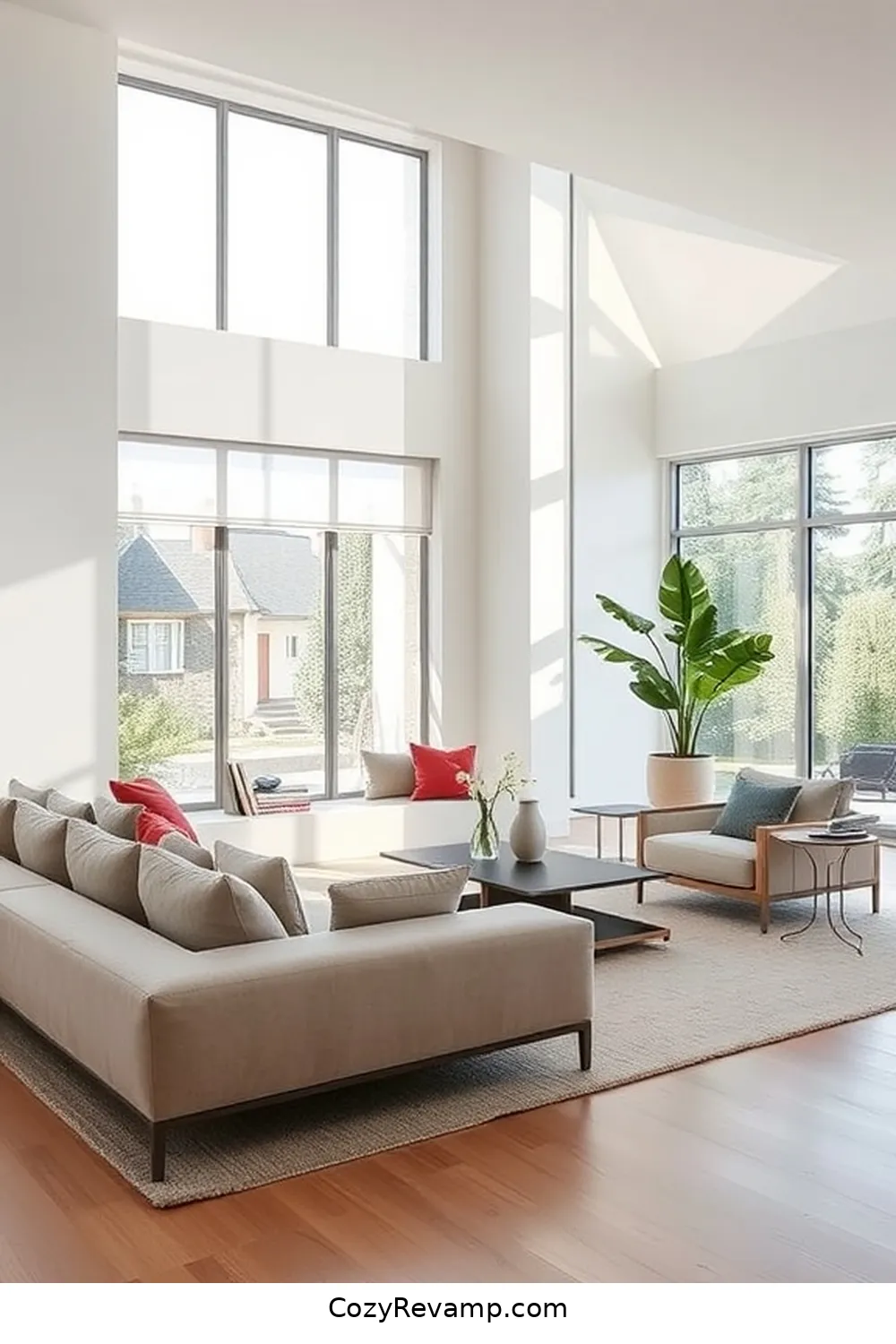
To maintain a minimalist aesthetic in my living room, I focus on the essential elements that truly resonate with me.
Embracing minimalism means curating a living space that reflects my true essence and brings me peace.
I believe simplicity doesn’t mean sacrificing style; rather, it’s about curating a space that feels intentional and serene.
Here are four key aspects I prioritize:
- Neutral Color Palette: I choose soft, muted tones that create a calm atmosphere and allow me to mix in my upcycled fabrics seamlessly.
- Functional Furniture: Each piece serves a purpose and complements the overall design without overwhelming the space.
- Textural Variety: I incorporate different textures through fabrics to add depth while keeping the visual clutter at bay.
- Thoughtful Decor: I select a few meaningful decor items that spark joy, ensuring they stand out without competing for attention.