This post may contain affiliate links. Please read our policy page.
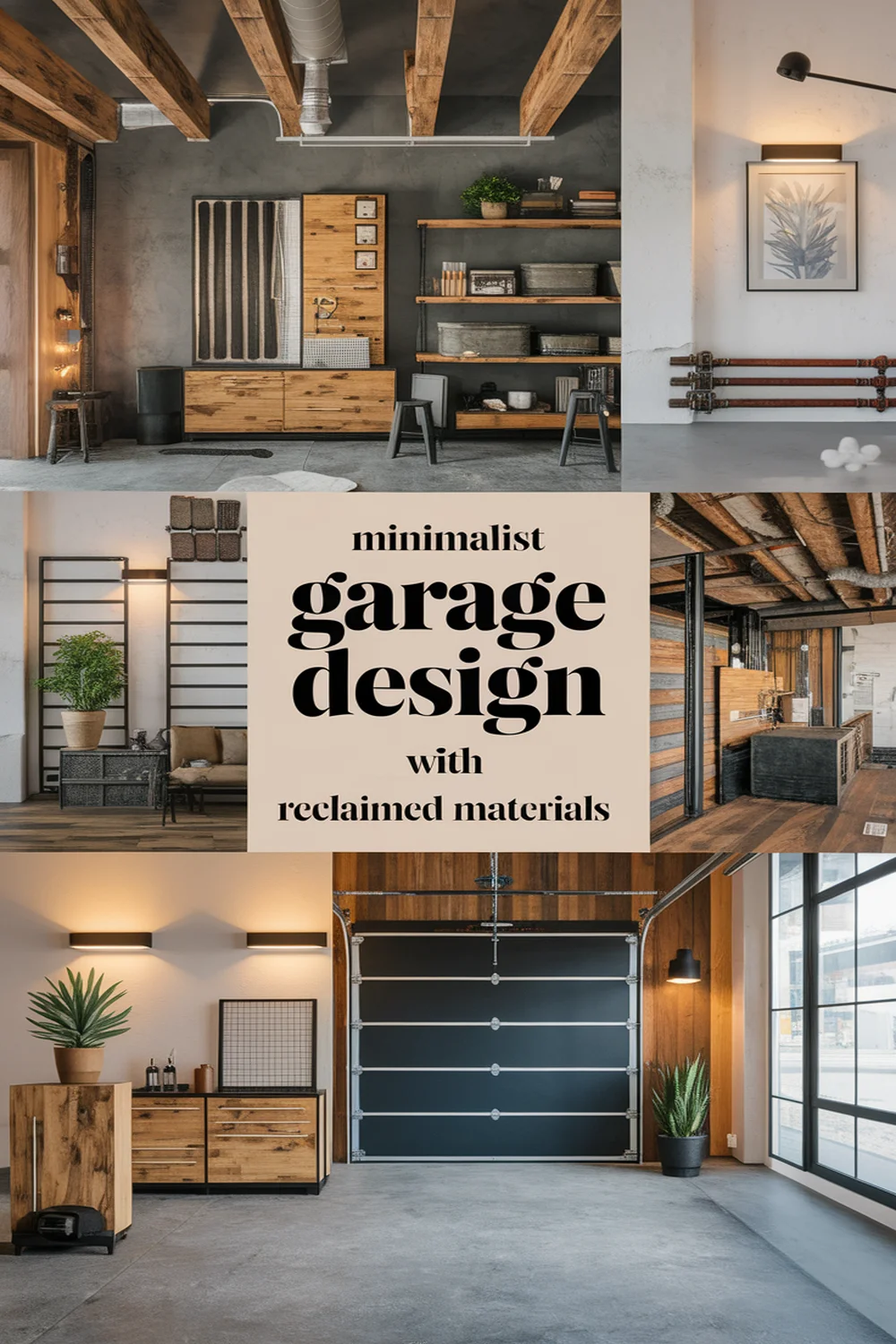
Designing a minimalist garage with reclaimed materials is a rewarding journey toward sustainability. I focus on simplicity and functionality, using items like reclaimed wood for shelving and pallets for storage. By evaluating your space and incorporating upcycled furniture, you can create an organized, clutter-free area. I love adding textures with plants and vintage elements to warm up the space. If you’re curious about more innovative ideas and tips, there’s so much more to explore!
Understanding Minimalism in Garage Design
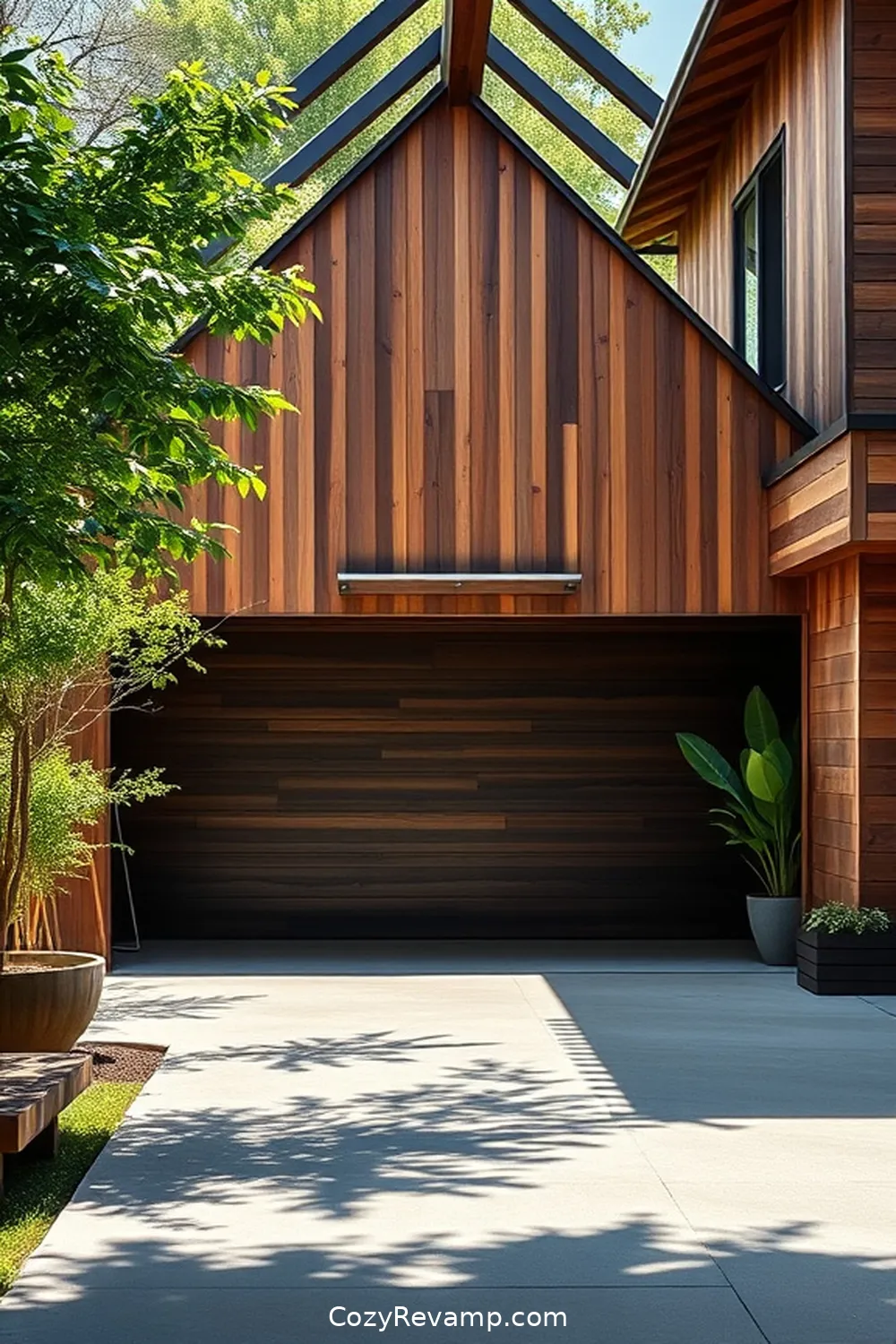
When I think about minimalist garage design, I envision a space that embraces simplicity while maximizing functionality. It’s all about creating an environment that’s free from clutter and distractions, allowing for a more efficient workflow.
By focusing on clean lines and a neutral color palette, I can make the space feel open and inviting. I prioritize smart storage solutions, like wall-mounted shelves and modular cabinets, which keep essential tools easily accessible yet neatly tucked away.
This design philosophy not only enhances the aesthetic but also promotes sustainability by encouraging the use of fewer, high-quality materials. Ultimately, a minimalist garage reflects an eco-conscious approach, prioritizing both practicality and innovation for a truly functional space that inspires creativity.
Benefits of Using Reclaimed Materials
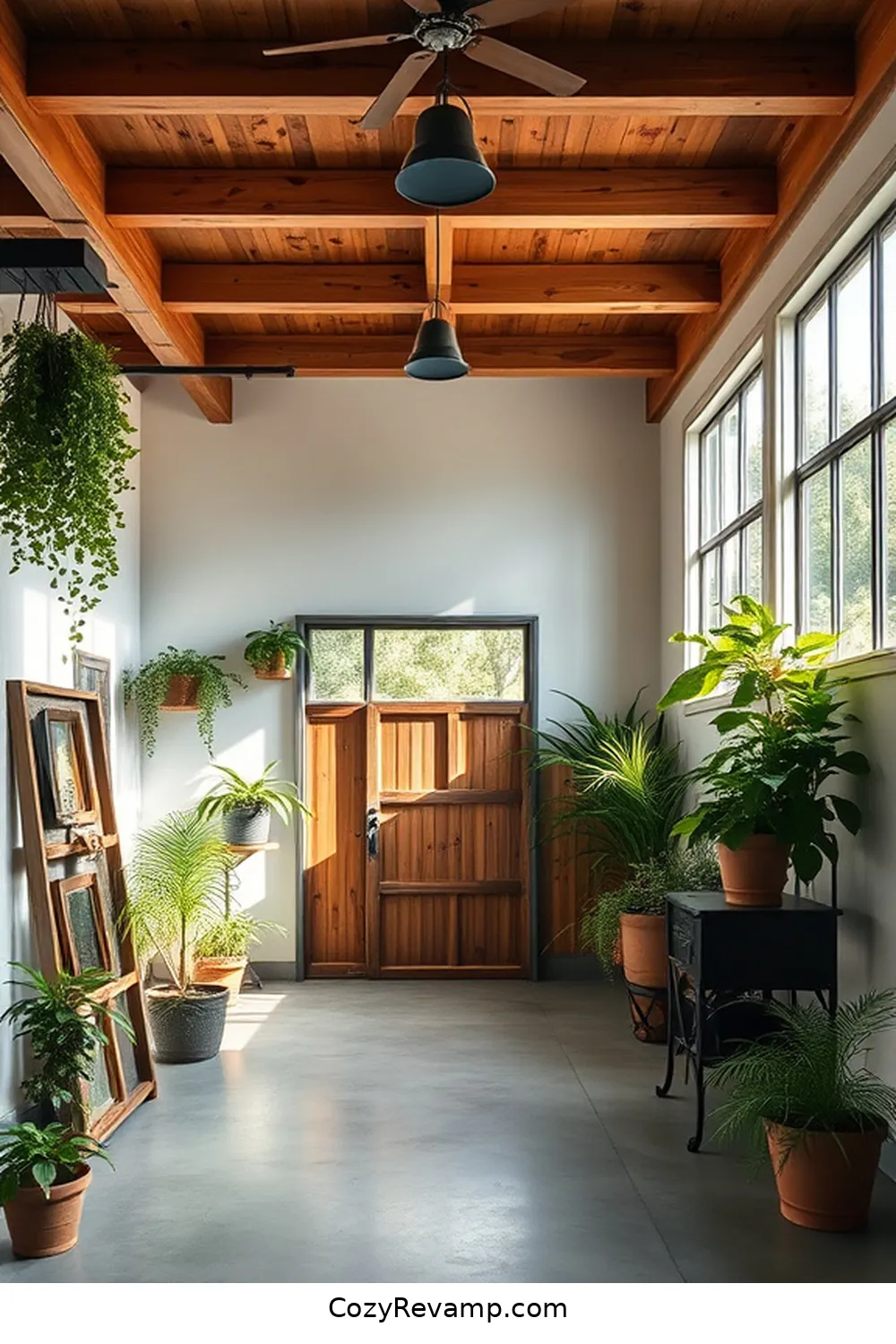
Using reclaimed materials in my garage design not only adds character but also aligns with my commitment to sustainability.
I love how each piece has a story, giving my space a unique charm that new materials simply can’t replicate. It’s a practical choice, too; reclaimed wood or metal often costs less than brand-new options, allowing me to stretch my budget further.
Plus, using these materials reduces waste and minimizes my carbon footprint, making my project eco-friendly. I appreciate the durability of many reclaimed items, which often have stood the test of time.
Assessing Your Garage Space
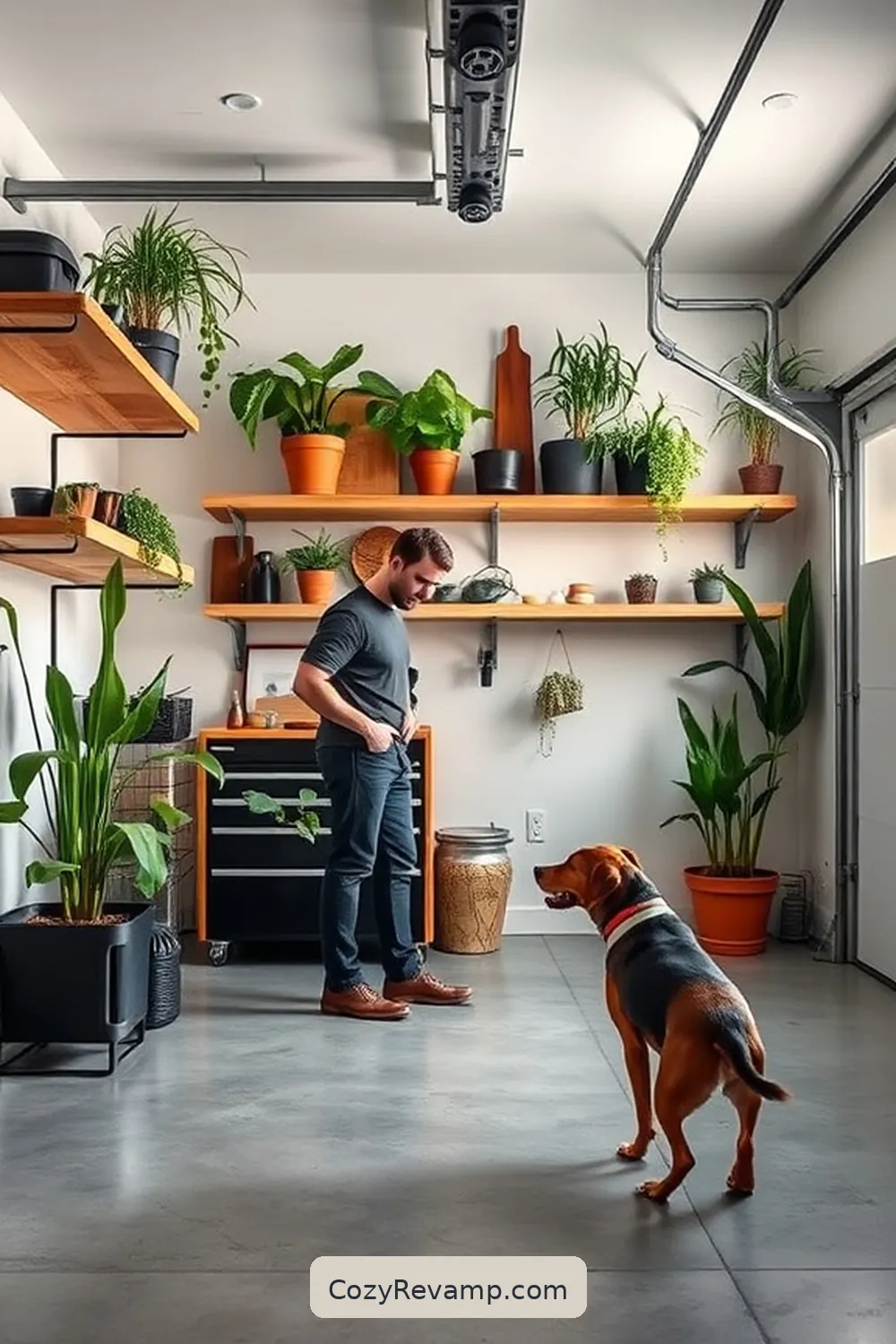
Before diving into design ideas, I take a moment to assess my garage space thoroughly. I start by measuring the dimensions, noting any irregularities that could impact my layout.
Next, I evaluate the existing structure—like windows and electrical outlets—to identify potential natural lighting and energy-efficient options. I also clear out clutter, deciding what to keep, donate, or recycle, ensuring I only hold onto items that serve a purpose.
This decluttering process not only creates a clean slate but also aligns with my eco-conscious values. Finally, I consider the overall flow and functionality of the space, prioritizing versatility to accommodate both storage and creative projects.
With this assessment, I’m ready to embrace a minimalist approach that resonates with sustainability.
Recommended Items
Explore these curated products and tools to create your dream minimalist garage with reclaimed materials!
Choosing the Right Reclaimed Materials
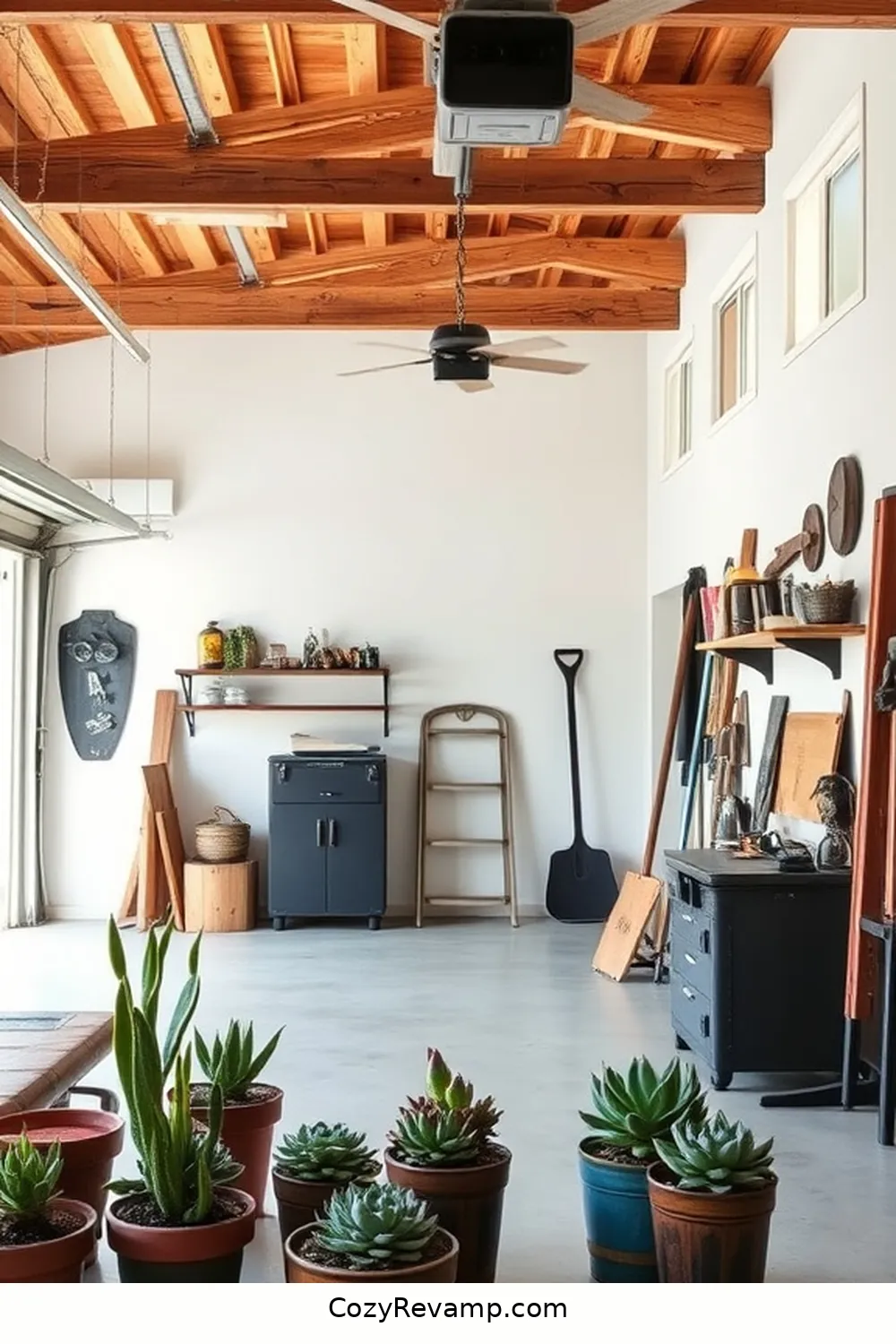
With a clear vision of my garage space, I turn my attention to choosing the right reclaimed materials. Selecting materials with character not only enhances aesthetics but also supports sustainability. Here’s a quick guide to help you decide:
| Material Type | Pros | Cons |
|---|---|---|
| Reclaimed Wood | Unique textures, durability | Requires treatment |
| Salvaged Metal | Industrial look, strong | Can be heavy |
| Vintage Brick | Timeless appeal, insulation | Limited availability |
| Upcycled Plastic | Lightweight, versatile | May lack aesthetic appeal |
I focus on sourcing materials that resonate with my minimalist vision while minimizing environmental impact. Each choice reflects my commitment to an eco-friendly lifestyle, transforming my garage into a purposeful sanctuary.
Step-by-Step Guide to a Minimalist Garage
Creative Storage Solutions
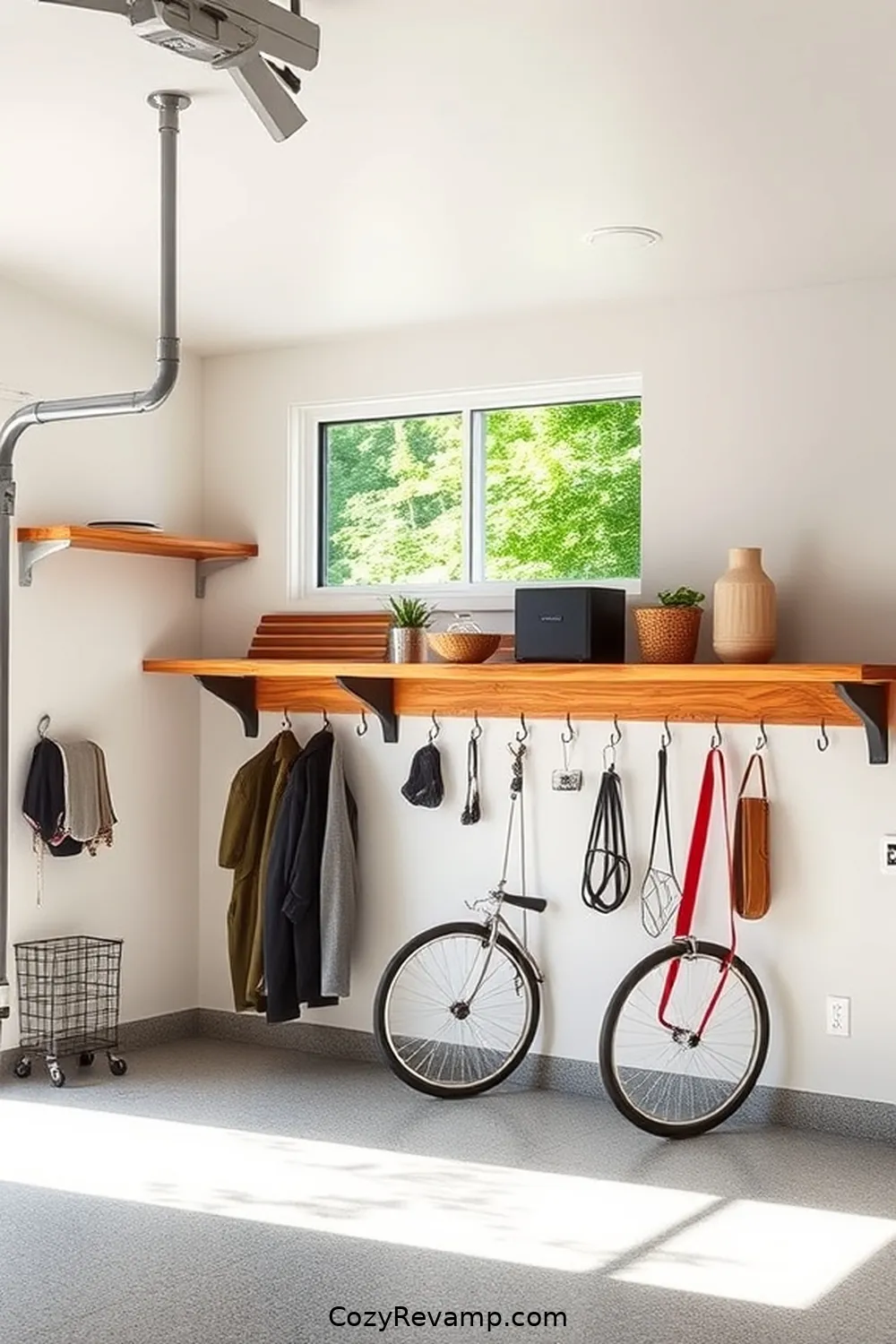
While I plan out my minimalist garage, I quickly realize that creative storage solutions are essential for maximizing space and maintaining an organized environment.
I’ve embraced repurposed materials like old crates and pallets to create unique shelving units. By stacking crates vertically, I not only save floor space but also add character.
Embracing repurposed crates and pallets, I create vertical shelving that saves space and adds unique character to my garage.
For tools, I’ve installed a pegboard made from reclaimed wood, allowing me to hang items where they’re easily accessible. I also use mason jars for small hardware, labeling them for quick identification.
Additionally, I’ve incorporated hooks on walls for bicycles and larger equipment, keeping them off the ground. These innovative solutions keep my garage clutter-free while promoting sustainability, proving that minimalism can be both stylish and functional.
Designing Functional Workspaces

Creating a functional workspace in my minimalist garage has transformed how I tackle projects and manage tasks. I’ve embraced reclaimed materials to craft a sturdy workbench, which not only reflects my eco-conscious values but also serves as a reliable foundation for my projects.
By utilizing wall-mounted shelving made from repurposed wood, I keep tools organized and within reach, ensuring efficiency in my workflow. I’ve also integrated a pegboard for easy access to smaller items, reducing clutter on my work surface. This streamlined approach enhances productivity while honoring sustainability.
Every element in my workspace has a purpose, allowing me to focus on creativity without distraction. It’s a practical solution that supports my innovative spirit while being kind to the planet.
Incorporating Natural Light
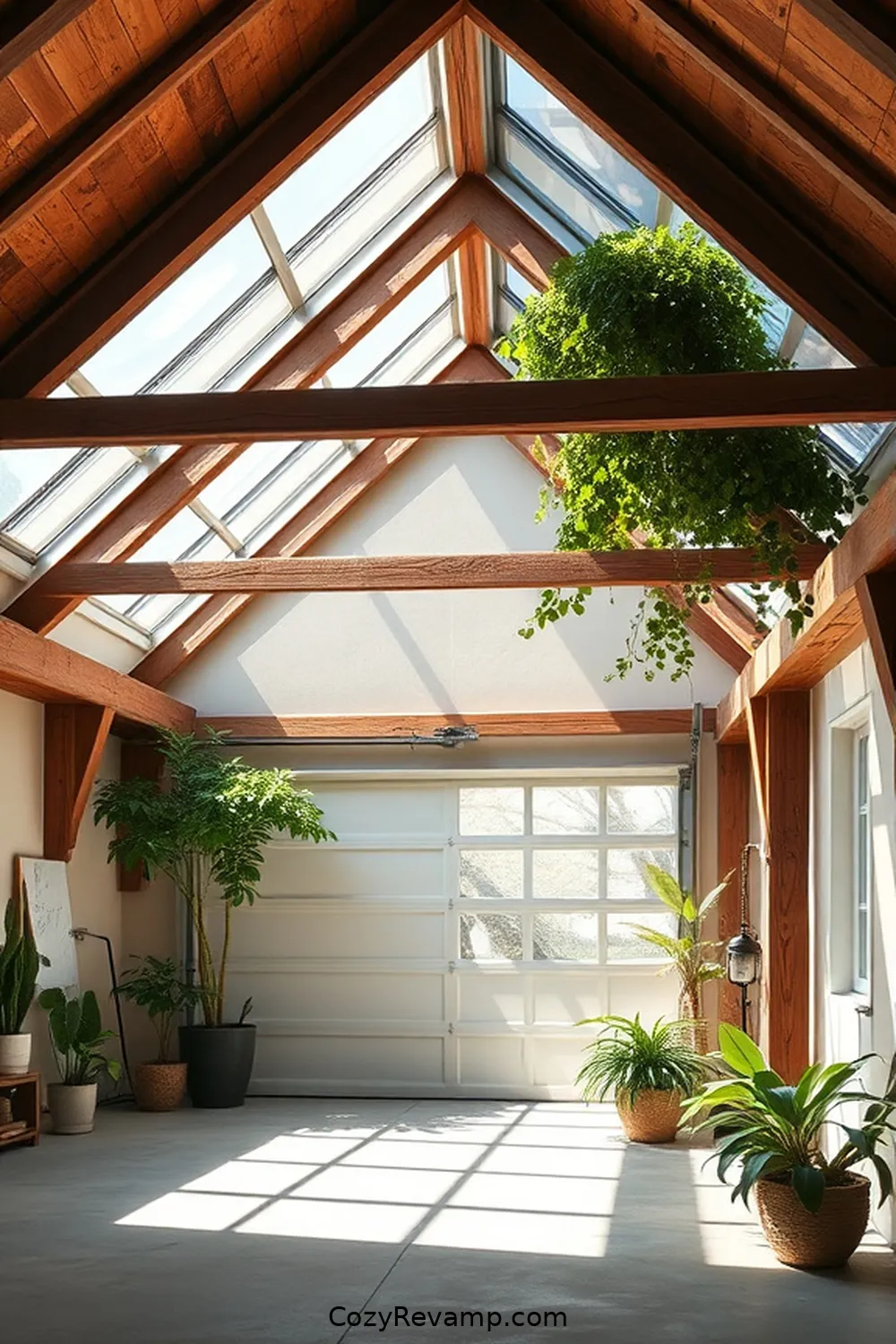
Since I wanted to maximize the utility of my minimalist garage, I prioritized incorporating natural light into the design. I chose large, reclaimed windows that not only let in ample sunlight but also reduce the need for artificial lighting during the day. I positioned them strategically to capture the sun’s path, creating a warm and inviting atmosphere.
To further enhance this effect, I installed a skylight made from recycled materials, which floods the space with daylight, especially during mornings. I also painted the walls in light, reflective colors to amplify the natural light.
This approach not only minimizes energy consumption but also creates a vibrant workspace, making my garage a pleasant place to spend time while staying eco-conscious.
Utilizing Vertical Space
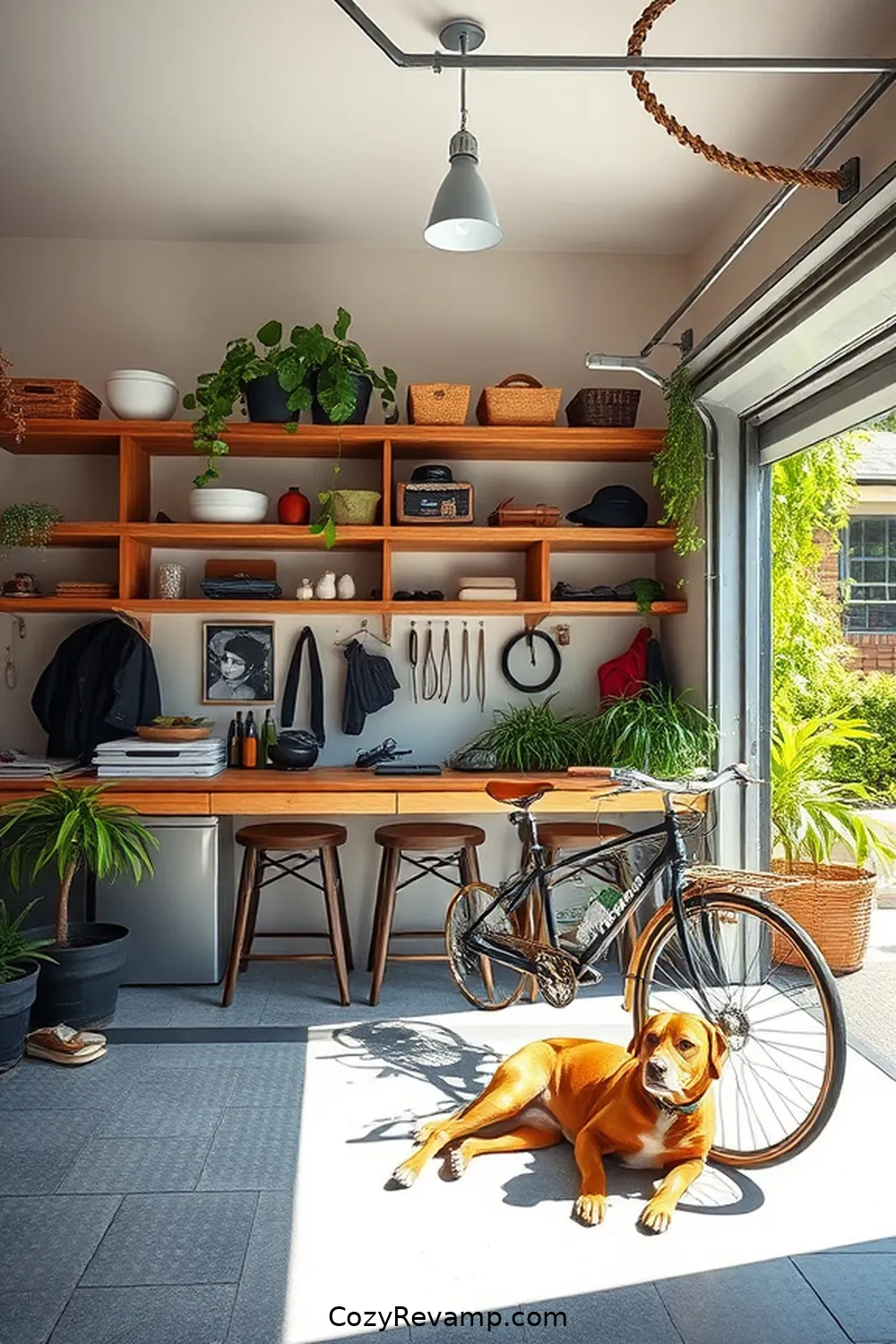
Three simple strategies helped me maximize vertical space in my minimalist garage.
First, I installed reclaimed wood shelves that not only look great but also keep my tools and supplies organized. Using upcycled materials means I’m reducing waste while creating a functional space.
Second, I added pegboards to the walls, which allow me to hang tools and equipment, freeing up floor space and making everything easily accessible.
Finally, I utilized wall-mounted racks for bikes and larger items, keeping them off the ground and creating a more open feel.
Sustainable Flooring Options
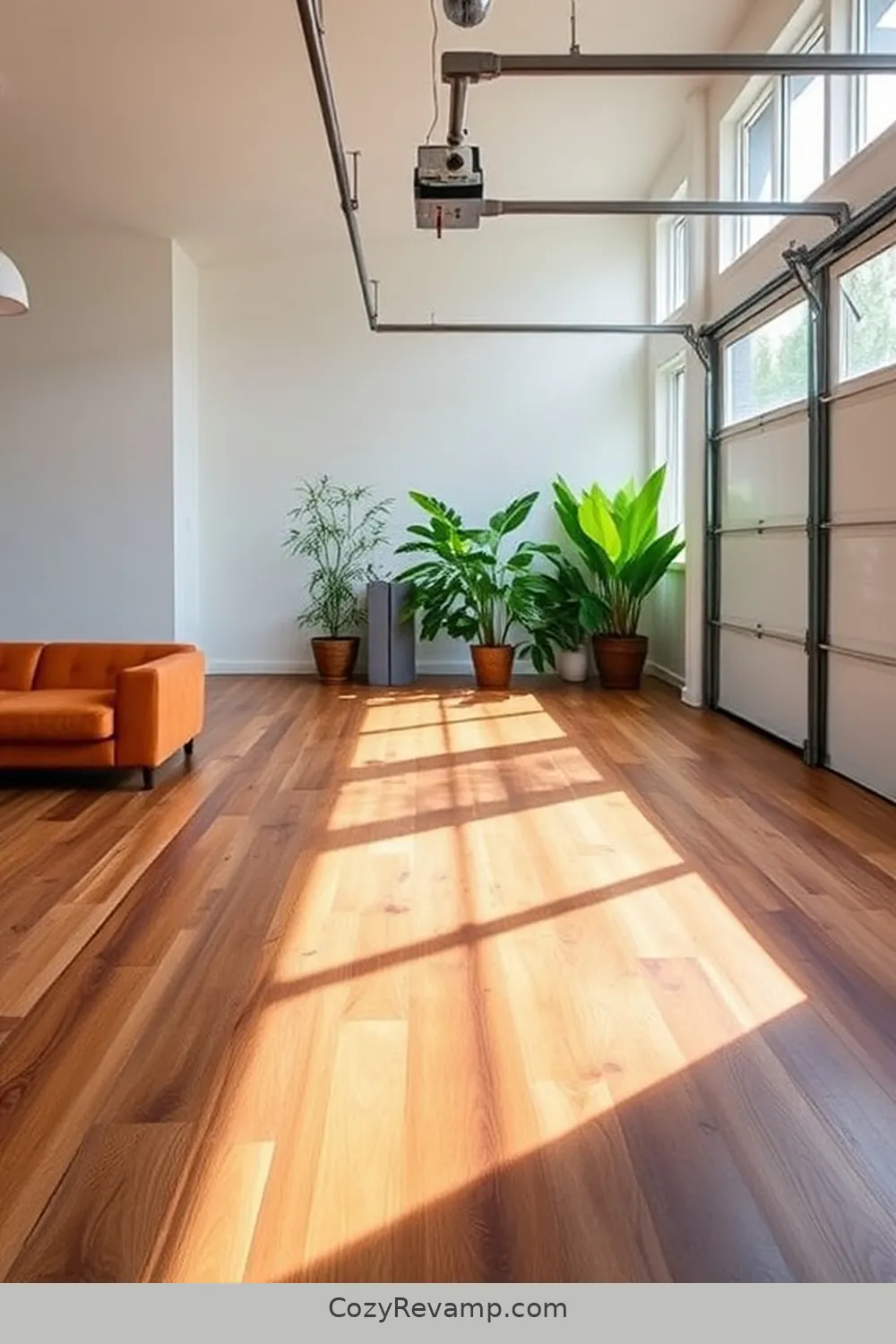
After maximizing vertical space, I turned my attention to the flooring in my minimalist garage. I wanted something sustainable yet durable, so I explored reclaimed wood and bamboo options.
Reclaimed wood not only adds character but also prevents waste from ending up in landfills. Bamboo, on the other hand, grows quickly and is incredibly strong, making it a fantastic eco-friendly choice.
I also considered polished concrete, which can be made from recycled materials and requires minimal upkeep. It’s perfect for withstanding heavy loads while providing a sleek look.
Eco-Friendly Paint and Finishes
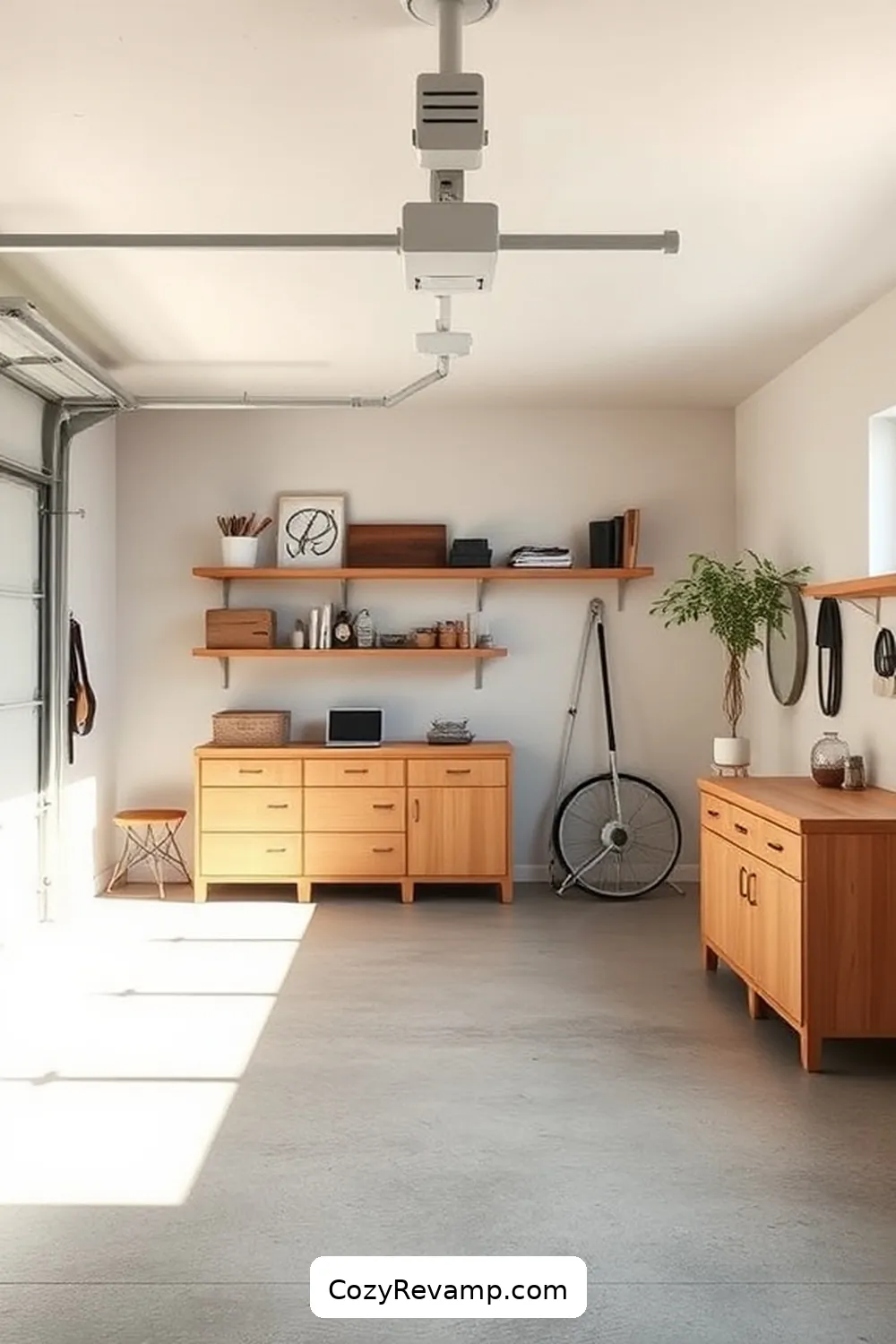
While transforming my garage into a minimalist haven, I knew the right paint and finishes could elevate the space without compromising my eco-friendly principles. I opted for low-VOC paints, which release fewer harmful chemicals, ensuring a healthier environment.
These paints come in a variety of colors, allowing me to choose shades that reflect my minimalist style.
For finishes, I discovered natural options like plant-based sealants that protect surfaces without toxic fumes. I also explored milk paint, a biodegradable choice that adds character with its matte, soft finish.
Upcycling Furniture and Fixtures
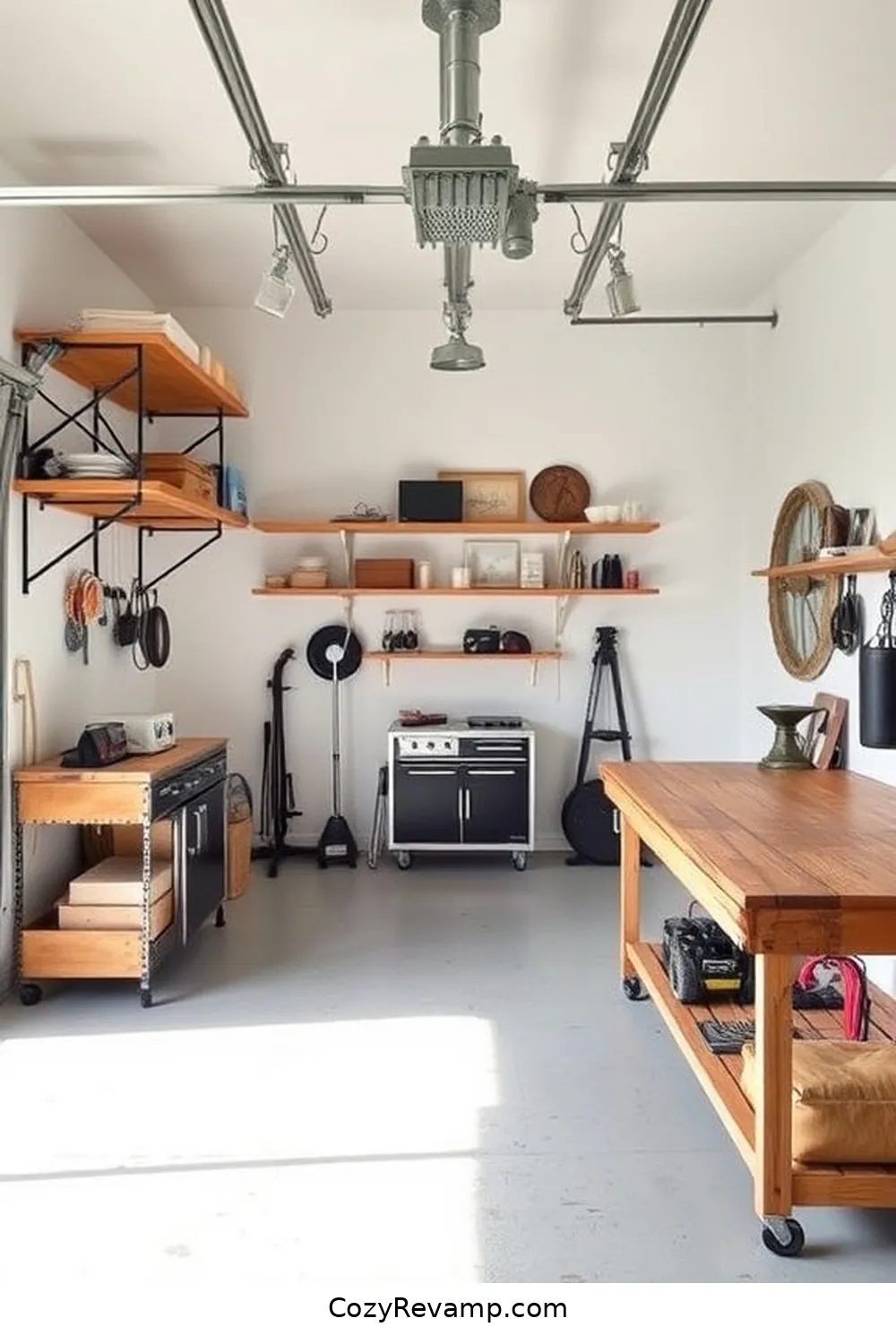
Although I wanted a sleek, minimalist garage, I realized that upcycling existing furniture and fixtures could add unique character without the environmental cost of buying new.
I started by scouring local thrift stores and garage sales for items that could serve a purpose in my space. An old wooden ladder became a stylish shelving unit, while mismatched crates transformed into storage for tools and gardening supplies.
I even repurposed a vintage workbench, giving it a fresh coat of eco-friendly paint to match my design. This approach not only saved money but also reduced waste.
Each piece tells a story and enhances the garage’s functionality, proving that innovation and sustainability can coexist beautifully in a minimalist setting.
Enhancing Aesthetics With Texture
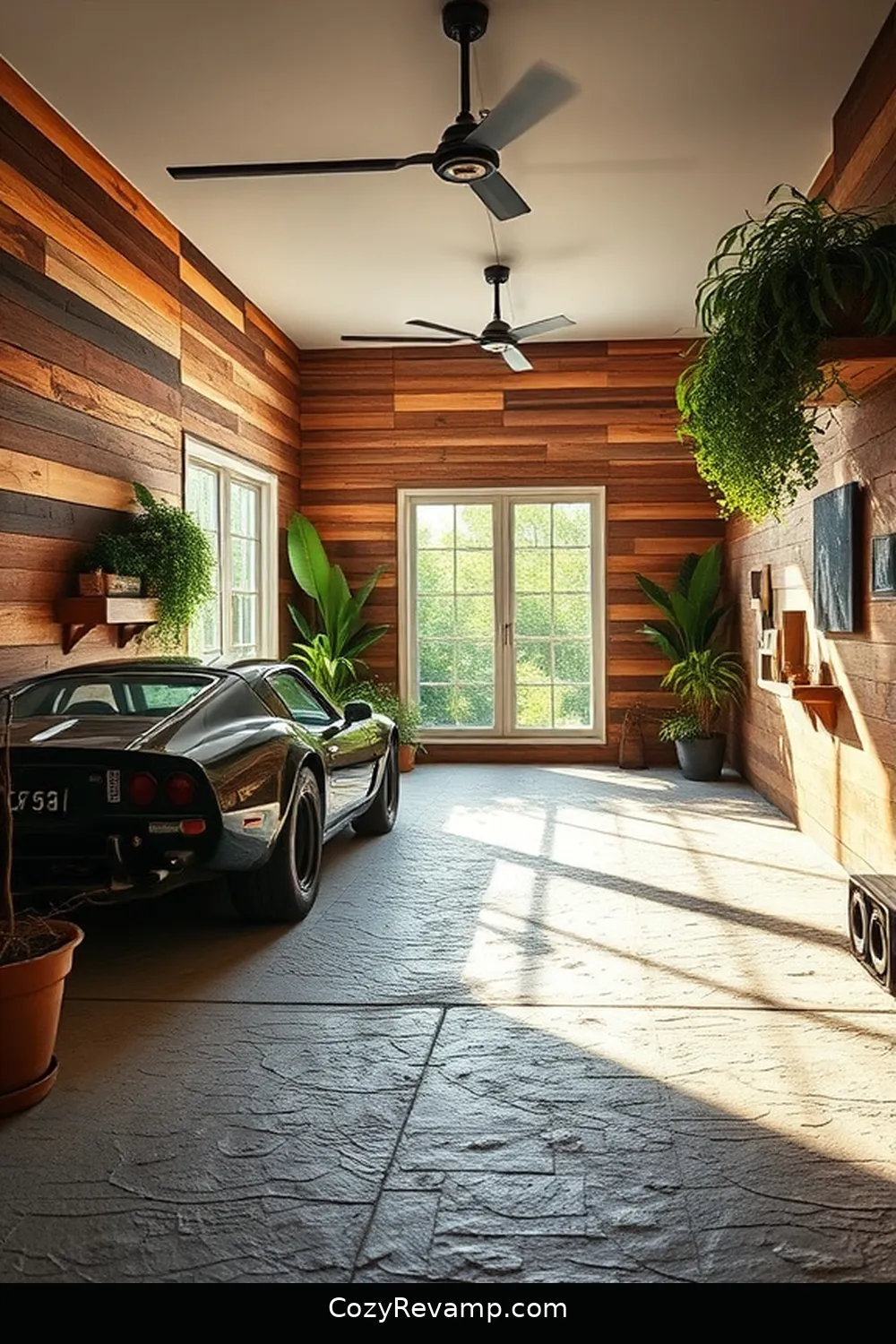
To create a truly inviting minimalist garage, I found that incorporating texture can elevate the overall aesthetic without overwhelming the space. By using reclaimed wood for shelving and accents, I introduced warmth and character. The natural grain adds depth, inviting touch and admiration.
I also embraced concrete, which brings an industrial edge while remaining eco-friendly. Pairing these materials with soft textiles, like a repurposed rug, softens the hard surfaces, creating a balanced environment.
I chose strategically placed plants, adding a living texture that breathes life into the garage. These elements work together harmoniously, ensuring the garage feels both functional and visually appealing, while staying true to my eco-conscious values.
It’s all about finding that perfect blend of materials!
Maintenance Tips for Reclaimed Materials
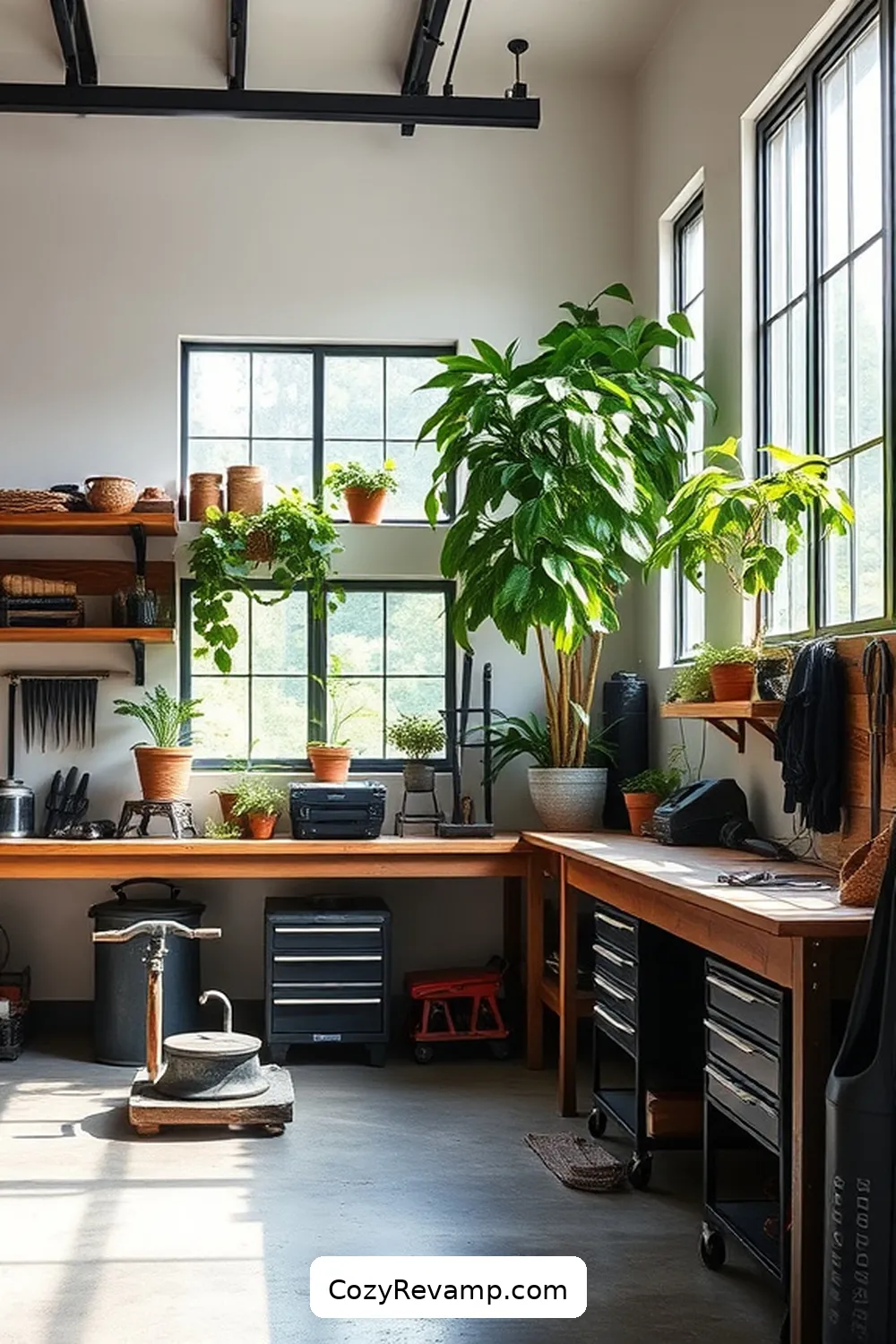
Incorporating reclaimed materials like wood into my minimalist garage not only adds character but also requires mindful maintenance to keep them looking their best.
Here are three practical tips I follow:
- Regular Cleaning: I gently dust surfaces with a soft cloth to remove dirt and debris, preventing buildup that can lead to damage.
- Moisture Control: I make sure to keep the garage well-ventilated. Using a dehumidifier helps protect wood from mold and warping.
- Periodic Treatment: Every few months, I apply a natural wood conditioner or oil, restoring the wood’s luster while ensuring longevity.
Personalizing Your Minimalist Garage

While I embrace the simplicity of minimalist design, personalizing my garage has transformed it into a functional and inspiring space.
I’ve incorporated reclaimed wood for shelving, which not only reduces waste but also adds warmth. Upcycled storage solutions, like vintage crates, keep my tools organized while adding character. A splash of color from plants in repurposed containers brings life to the surroundings, reminding me of nature’s beauty.
I’ve also hung art made from reclaimed materials, showcasing creativity while staying eco-conscious. Each element reflects my personality without cluttering the space.
Inspiring Examples of Minimalist Garage Designs
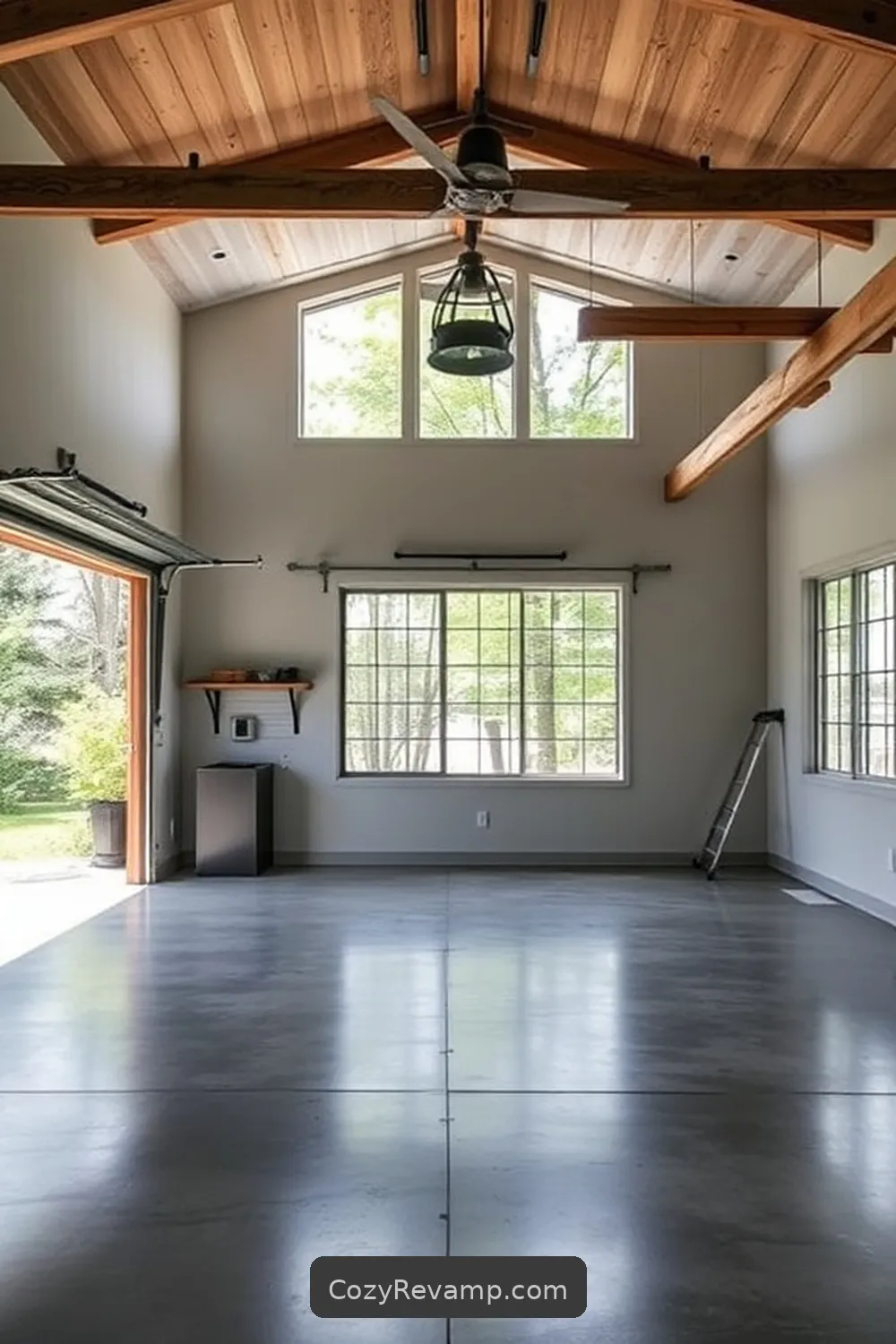
Minimalist garage designs can be both striking and functional, serving as a canvas for creativity while maintaining an organized space.
I’ve come across some inspiring examples that truly embody this philosophy:
- Reclaimed Wood Shelving: Imagine sleek, open shelving made from salvaged wood, displaying tools and plants, merging utility with nature.
- Concrete Flooring: Picture a polished concrete floor that’s not only durable but also eco-friendly, reflecting light and enhancing the garage’s airy feel.
- Sliding Glass Doors: Envision large sliding glass doors that seamlessly connect the garage to the outdoors, inviting natural light and blurring the lines between spaces.
These elements inspire me to create a garage that’s not just a storage area, but a sustainable, functional extension of my home.